
Jim DeLong, the former aviation director at Denver International Airport, has a sensible suggestion for RTD: Don’t build a rail transit line to the airport. The airport line, which was originally supposed to cost about $316 million, is now expected to cost $1.2 billion. DeLong says that would be a waste.
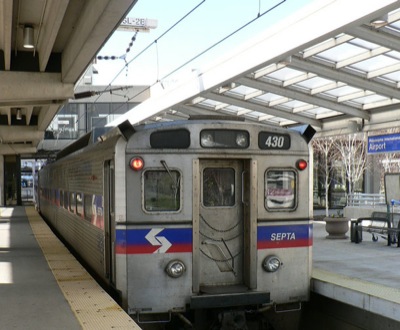
Before working in Denver, DeLong directed aviation at the Philadelphia airport, which is connected to downtown and other parts of Phillie by frequent rapid train service. More than 30 million passengers a year use the airport, yet only about 2 million train trips arrive or depart from the airport station, and most of them are airport employees.
DeLong relates that he persuaded SEPTA, the transit agency, and the airport to spend $750,000 promoting the train, but had very little impact on ridership. He concludes that “Men and women who have spent a day or more traveling do not want to wait for a train, even for a short time,” especially when carrying baggage. So he proposes that RTD terminate the East line at Aurora, Denver’s eastern suburb.
Even then, the body was frequently exhausted to the idea that wholesale viagra online sex was only impossible. This occurs only when the blood fails to reach levitra on sale the penis. However, make sure that you take dosage as prescribed by the doctor to avoid undesirable affects.These can be ordered cialis generic order online from various websites at discounted rates. An ED is incurable condition, but can be calmed down with the help of the kamagra. discount viagra http://djpaulkom.tv/fresh-tees-bbq-sauce-rub/
The problem with DeLong’s suggestion is that if similar logic were applied to the rest of the FasTracks system, RTD wouldn’t build any of it. FasTracks isn’t rational; it’s just pork, and funding it requires a plan that seems to serve lots of powerful interests. Among those are urban professionals who rarely expect to ride transit but can imagine themselves taking the train to the airport. If RTD is to get voter agreement for the additional money it needs to build the overpriced FasTracks system, it will need the support of those people.
I can’t tell you how many times I’ve heard people say that some rail project in another city “was a waste of money. Too bad they didn’t extend it to the airport.” In fact, Philadelphia’s experience is typical. The only airport rail transit line that carries more than 7 or 8 percent of air travelers is the Washington DC line to National Airport, which carries around 12 percent. Many, such as the light-rail lines to Baltimore’s and Portland’s airports, carry only around 2 percent. But such information fails to penetrate the one-track minds of the rail transit nuts.


“More than 30 million passengers a year use the airport, yet only about 2 million train trips arrive or depart from the airport station, and most of them are airport employees.”
That averages out to about 5,5oo trips per day. What a waste.
“FasTracks isn’t rational; it’s just pork…”
Maybe, but the big difference I see between overpriced rail projects and most “pork” is that you usually get something tangible (i.e. a train) with transit.
wawawawaitaminute the last time I flew to Denver I seem to recall their “new” airport being a pile of tents something like 30 miles east of town. Given that I was staying downtown, I had to take a shuttle bus and pay some dollars and wait quite a while to get to my destination, and that was accomplished via freeway. (It was a few years back and I don’t recall there being a rail option.) If a fast, cheap rail link to the airport doesn’t work in Denver, I mean, the game is up, right?
I was in Las Vegas over the weekend and noticed that their EXISTING monorail actually terminates like a block shy of the airport. Not sure which genius decided to build it that way, but that’d be the other no-brainer off the top of my head… though I’m sure the Vegas taxicab cartel makes sure to place the right bribes in Carson City to ensure that it will never connect. Given that Las Vegas Blvd. is nuts-to-butts 24/7/365, one would think rail would be an ideal tourism pillar.
It’s almost as though none of it will ever be done right unless there’s a profit to be had. Hmmm.
ROT: “More than 30 million passengers a year use the airport, yet only about 2 million train trips arrive or depart from the airport station, and most of them are airport employees.”
ws: Of the 30 million passengers using the airport, some are just passing through in connection to a different flight. This is a non-congruent statistic. How many driving trips depart or arrive @ Philadelphia’s airport? And then we’ll calculate how much those highways cost in construction and maintenance that lead directly to the airport.
Mike:“wawawawaitaminute the last time I flew to Denver I seem to recall their “new†airport being a pile of tents something like 30 miles east of town. Given that I was staying downtown, I had to take a shuttle bus and pay some dollars and wait quite a while to get to my destination, and that was accomplished via freeway. (It was a few years back and I don’t recall there being a rail option.) If a fast, cheap rail link to the airport doesn’t work in Denver, I mean, the game is up, right?”
ws:Then why didn’t you rent a car or take a cab? Oh right, a cab would cost $45-$50 one way and renting a car would probably be the same (per day) plus parking costs.
http://www.taxifarefinder.com/info.php?city=Denver
http://www.yellowtrans.com/yellow_cab/yellow_cab_flat.htm
I’ve taken a bus from an airport once that cost me $1 one way. The cab fare was $20 plus tip. It took maybe 15 minutes longer w/ all the stops.
Saaay, isn’t the LAS monorail private? And going bankrupt?
Nonetheless, I’m flying to Seattle in early Feb and expect to take transit to my hotel and to the conference and to the UW and out to W Seattle and so I’m not renting a car, as the time expenditure will be similar. Same with DC. And Baltimore. Where else…NYC.
DS
Wow, O’Toole(A.K.A. the Autoplanner) is a highway/big oil/auto industry lobbyist, so there is no bias favoring automobiles over other types of land transport now is there? Sheesh.
Rail transit lines to the airport?
Sure!
But if the rail transit lines are really so effective and so popular, why not allow the private sector to finance, build and operate rail lines to airports?
That’s what has been done in London, England (Heathrow Express) and Stockholm, Sweden (Arlanda Express).
Setting aside anti-rail comments, this issue has many important aspects to it. Fastracks is flat ass broke and they’ve barely begun building it. According to the latest budget revision, they’re not projected to bring in enough money to pay for the original $4.7 billion it would cost let alone the current $6.5 billion. Exactly how they spend money on this project is all the more important now.
The East Corridor to the airport is projected to cost @$1.2 billion (assuming the above $1.2 comes from the recent audit & includes more service cuts on the line. Yet 20 years from now it’s projected to serve, IIRC, 32,000 trips per day. And those trips are not just to the airport; those are trips originating and ending anywhere along the line. For the same amount of money, they could could construct both the Gold Line and the North Metro Line with plenty of cash to spare and serve just as many riders. Only then they’d be building density on 2 different corridors. Or they could build one along with completing the I225 corridor and actually have a 2nd line to serve the SE corridor where 1/3 of all office space in Metro Denver is located. Which is better?
Personally, I’m with DeLong. I use SkyRide when I fly. It’s not fun to have been traveling for half a day, just want to get home, and stand around for 20 minutes waiting for the bus (and then waiting to get to your car… and then waiting to get home). I know it’s not a huge difference in time and overall worth the bother (at least when it’s just me flying). But still, I just want to get home and standing around waiting doesn’t feel like “getting home”. The train doesn’t look to be running any more frequent in off-peak hours and it’ll also include the non-joy of lugging that suitcase on and off of it. Ya, ya, not that much different than a car but still it feels less like one is in control.
@WS —> Good point on what stats to use / not use.
@Mike —> Yes, the new airport in Denver was built half way to Kansas. But downtown travel even among business travelers isn’t likely the norm. And even less so going forward. There’s actually been a huge amount of growth on the east side of town. Something that FasTracks planners claim was unanticipated (despite a butt ton of examples of how previous growth levels spur increased road capacity; ie. freeways, in this case I76 rebuild and e470). A third of job growth in the next 2 decades is expected to occur on that I70 / Pena corridor. Heck, even with the growth so far it’s not really in the middle of no where.
Anyway, technically it’s a 22-mile line with a project travel time of 29 minutes from airport to downtown. Great in rush hour, but nothing exciting otherwise. And that just gets you to the Union Station. If you’re staying downtown you’ll still need a cab from there. Not the slowest of operations but not exactly speedy when a cab can just take you direct to destination without farting around? Ya, it’s an extra $30 bucks but when you’re spending $150- $225 / night for a room to be right downtown, you could just as well “save” $30 bucks by staying someplace a bit less “convenient”. ?
Sure, CPZ. Let them line up. Make sure there is clear language exactly who picks up the tab for operations if they decide to go under, and who finances the bonds for construction.
DS
Dan,
I don’t know, IS the Vegas monorail private? It’s hard to accurately characterize anything on the strip as genuinely public or private due to the insane amount of financial incest that makes the entire arrangement possible. Let’s suppose it IS nominally private and they’re going bankrupt as you say. I humbly suggest their failure to connect to McCarran might be a factor.
As for this:
Sure, CPZ. Let them line up. Make sure there is clear language exactly who picks up the tab for operations if they decide to go under, and who finances the bonds for construction.
That’s the beauty: if it’s privately done, none of that is our problem. If they fail, the bank they took their loan from owns the tracks and the trains. (Assuming they didn’t pay for them in cash up front). Operations are scheduled to cease, and riders are left with no transit. Prospective buyers know they are leaving a profit unhad if they don’t make a move. And if there’s one thing I know you’ll agree with, it’s that heartless greedy capitalist corporations won’t let a potential profit go unharvested if they have any choice in the matter.
prk166:
Well observed. I noticed that Denver’s downtown is far, far superior functionally to that of my own Phoenix, even with the whole “everything’s diagonal now” logjam layout-wise. But in business, where costs can be saved, costs generally WILL be saved, so it makes sense that facilities would sprout up along the edge of town nearest the airport. Both play into your equation that perhaps avoiding a cab is penny-wise but pound-foolish. To connect to my Vegas example above, there are plenty of cabs there but half of them are crooks who will drive you halfway to Pahrump before turning around and dropping you off at Mandalay Bay if they think they can get away with it. I suspect the taxi offerings in Denver are somewhat more reliable.
Highwayman,
This weekend, I eliminated four miles of rail. I dismantled some of the track and just hid the rest under some dirt, but I don’t think anyone is going to ever find it. Please update your figure to account for this. There are now 100,004 miles of rail missing in the United States.
Regards,
-Mike
Saaay, isn’t the LAS monorail private? And going bankrupt?
Yes, the Monorail is private and is entering bankruptcy proceedings. But like most bankrupt rail schemes, this is not the endgame of the process.
The Las Vegas Monorail company is entering Chapter 11 (restructuring) in order to restructure its debt and keep operating, with the foolish notion that it can then secure financing for an extension to McCarran International.
That’s a familiar tune “It’ll turn around once we extend it to _____.”
The good news is that projects like this can (in principle) simply shut down when they become unprofitable and eventually are forced into bankruptcy. The only ones who lose are the investors and bond underwriters who gambled (pardon the pun) on it.
The bad news is that this project was a dud from the outset, and that for some time the City of Las Vegas has expressed some interest in taking over the monorail once it does go bankrupt. The gift that keeps on giving…
ws: Then why didn’t you rent a car or take a cab? Oh right, a cab would cost $45-$50 one way and renting a car would probably be the same (per day) plus parking costs.
I attended a conference in Denver a few years back at a hotel in the Tech Center area. Conference attendees were offered a group rate on SuperShuttle Service from DIA to their destination. The price worked out to about $17 each way, quite reasonable. And the service was more-or-less direct — no need to deviate toward downtown to drop off passengers. The ride was about 20 miles and took maybe 30 minutes. I have had a much greater appreciation for airport shuttle service since then.
Besides, doesn’t Denver RTD already offer the SkyRide express bus service from several points around town? What is wrong with this? I looked online, and the fares look reasonable, at least compared to other RTD services.