The Antiplanner

Hawaii – Land of Crony Capitalism

28th June 2010

Hawaii – Land of Crony Capitalism

posted in Regional planning, Travels |

Wikipedia defines crony capitalism as an “allegedly capitalist economy in which success in business depends on close relationships between businesspeople and government officials.” Crony capitalism has sadly played an important role in state and, especially, local government for just about ever. But Hawaii suffers from a particularly strong case.

Hawaii’s history of crony capitalism dates back at least to the mid-1950s. Before then, the future state was run by an oligarchy consisting of the Big Five land-owning companies and a sixth company that was mainly involved in construction. The oligarchy ran the political, economic, and social system of the entire territory in a system that would be considered more feudal than crony capitalistic. Nearly all of the private land in the islands was owned by one of these companies or a relative handful of other families, companies, or trusts, leaving only about 3 percent of the state available for fee simple ownership by ordinary residents.

That began to change in 1954, when reform-oriented Democrats, bolstered by the votes of children of immigrant workers from Japan, China, and the Philippines, took control of the legislature for the first time in the territory’s history. Among other things, the Democrats promised land reform so that more land and opportunities would be available to the average person.
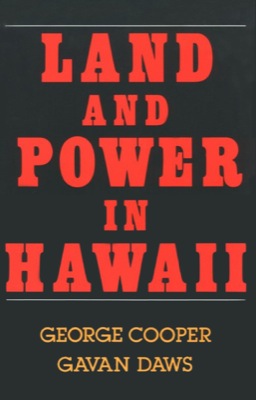
As George Cooper and Gavan Daws showed in their classic 1985 book, Land and Power in Hawaii: The Democratic Years, the main beneficiaries of the reforms imposed by the legislature were the legislators themselves, not their constituents. The Big Five may have lost political power, but they continued to control the land and development by including powerful Democrats in every land deal. Cooper and Daws painstakingly reviewed thousands of development projects and found that traditional developers simply partnered up with the Democrats in deal after deal. In some cases, the legislature would pass a law benefitting one of the oligarchs and, within days, the members of the legislature who worked hardest on the bill would have their names included in a new deal.

One of those legislators was elected U.S. Senator when Hawaii became a state, and today is the second-longest serving senator in history. From his post as chair of the Senate Appropriations Committee, Senator Inouye makes sure that plenty of pork reaches his state.

Evidence of Hawaii’s crony capitalism can be seen in Honolulu Mayor Mufi Hanneman‘s push for a horrendously expensive and totally unnecessary 20-mile rail line that is projected to cost more than $200 million per mile. Since all of Honolulu’s electricity comes from burning fossil fuels, the rail line will do nothing to save energy or reduce pollution. But Mayor Hanneman hopes that it will propel him into the state governor’s office, for which he is running right now.

Saddle Road on the island of Hawaii. Click for a larger view.

The Antiplanner may have enjoyed another example of Hawaii’s crony capitalism on the Big Island. During a long bike ride from Hilo to Waimea, I could not help but notice that the state was widening the two-lane road into a road that must have been 60 feet wide but was still striped for only two lanes. I certainly enjoyed the extremely wide shoulders that, even with rumble strips, could comfortably fit four cyclists riding abreast. But why did they need so much asphalt when, say, 44 feet — two fourteen-foot lanes and two eight-foot shoulders — would have been more than adequate. Even in the unlikely event that traffic should someday justify four lanes, the rumble strips mean that the state would have to repave them before restriping them. It makes me suspect that this project (described on page 3 of this document) is somehow a gift to local contractors.

Crony capitalism presents a problem for liberals and libertarians alike. Left-wing reforms give government more power, which gives incentives for corporations and the wealthy to manipulate that power to their own benefit, with the result that the reforms have exactly the opposite of the goal of bringing power to the people.

Libertarians believe government should consist of a few basics, such as police and courts, needed to protect people and their property, leaving everything else the private sector. But places with minimal governments — such as America in the nineteenth century — saw plenty of crony capitalism. Meanwhile, Transparency International’s corruption perception index lists several big-government countries, such as Denmark and Sweden, among the least-corrupt countries in the world. (The United States is ranked 19; note that the index only measures perceptions of corruption, not corruption itself.)

To the extent that the index is meaningful, perhaps it means that corruption has less to do with the size of government than with the other checks-and-balances built into the government. If so, then someone should identify which checks-and-balances do the most to minimize crony capitalism and push to build those in to our system.


There are currently 81 responses to “Hawaii – Land of Crony Capitalism”

Please feel free to submit comments. Constructive debate is welcome. Ad hominem attacks and name-calling will reveal the shallowness of the author. Foul language may be deleted. Your first comment will require moderation; after that, all comments will be approved unless they contain too many links in which case the software may hold them for approval as potential spam.

  1. 1 On June 28th, 2010, the highwayman said:

    The Autoplanner: Wikipedia defines crony capitalism as an “allegedly capitalist economy in which success in business depends on close relationships between businesspeople and government officials.” Crony capitalism has sadly played an important role in state and, especially, local government for just about ever. But Hawaii suffers from a particularly strong case.

    THWM: Then Mr.O’Toole you should feel right at home since you’re on Koch’s pay roll.

  2. 2 On June 28th, 2010, scrappy said:

    Aloha,

    Disclosure: I am a member of the Sierra Club in Honolulu and voted for rail when it was on the ballot here. The rail initiative passed, btw.

    I could not disagree more with you about the need for rail in Honolulu to reduce our carbon footprint, save energy and get us off the maddening addiction to cars. Commuters in Honolulu only have two options now: drive in maddening rush hour congestion or catch the bus in maddening rush hour congestion. Both options burn gasoline. the rail line will be electrically powered and the local power utility is making a big push to use renewables in its fuel mix. I am also very pleased that the city is integrating rail into its islandwide bike plan. that should greatly improve the bike culture here and the make it easier for people to bike to rail stations.

    The environmental community in Honolulu is strongly behind rail.

  3. 3 On June 28th, 2010, Borealis said:

    Thanks for the local info, scrappy. Do you know or have links to the calculations made predicting the energy and carbon savings?

  4. 4 On June 28th, 2010, chipdouglas said:

    scrappy, since you voted for Hawaiian rail, can we also trust you to vote by paying full farebox to offset capital, interest and O&M etc.? At $200 million per mile, it should only be a few hundred dollars every time you step on board. Or are you going to let your neighbors pay your way?

    BTW, “maddening addiction to cars” = maddening addiction to convenience and efficiency.

  5. 5 On June 28th, 2010, bennett said:

    Just wanted to say I love todays post by Mr. O’Toole. Extremely balanced and honest. Criticism of the usual suspects, but good recognition of market failures and problems the libertarian philosophy inevitably encounters. Well done. I couldn’t agree more with the idea “…that corruption has less to do with the size of government than with the other checks-and-balances built into the government.”

    I’ve said it before. It’s not about eliminating the things we don’t favor, but participating in the process to make sure there is accountability, and that our preferences are accurately represented.

  6. 6 On June 29th, 2010, Honolulu’s Rail Plan » The Antiplanner said:

    [...] in response to the Antiplanner’s post about crony capitalism, Scrappy commented that Honolulu needs rail transit to “reduce our [...]

  7. 7 On June 29th, 2010, JimKarlock said:

    scrappy said: I could not disagree more with you about the need for rail in Honolulu to reduce our carbon footprint,
    JK: Don’t you know that;
    1) there has been no statistically-significant global warming since 1995 and
    2) the earth has been cooling since 2002 and
    3) the recent rate of warming is not statistically significantly different from the rates of warming in these earlier periods: 1860-1880, 1910-1940 and 1975-1998.
    4) the debate on climate change is NOT over.
    All above is per IPCC lead author and CRU chief, Dr. Phil Jones. See http://news.bbc.co.uk/go/pr/fr/-/2/hi/science/nature/8511670.stm

    5) Water vapor causes most of the greenhouse effect, with CO2 only being no more than about 30% of any greenhouse effect. See realclimate.org/index.php?p=142

    6) Of the total annual CO2 emission, man emits only about 3-4%, with a lot of that being land use and cement making. See http://www.sustainableoregon.com/co2_sources.html

    7) In the ice cores that Al Gore showed in his slide show, he claimed that CO2 caused the temperature to rise. That was a lie. Actually CO2 starts to rise about 800 years (600_1000 years) after Antarctic temperature. See: Realclimate.org/index.php?p=13. (Note their convoluted logic to try to save their claim that CO2 is still guilty.) Also: http://www.sustainableoregon.com/co2climate.html
    8) The best evidence we have that CO2 is causing the climate to heat up is that “we can’t explain the warming from the 1950s by solar and volcanic forcing”. See http://news.bbc.co.uk/go/pr/fr/-/2/hi/science/nature/8511670.stm

    So, you may want to re-evaluate your belief in man’s CO2 causing climate change.

    scrappy said: get us off the maddening addiction to cars.
    JK: Why do you find it maddening that other people make choices that you don’t like? Do you have a problem allowing others freedom? Why do you find it maddening that people want to save time by driving instead of wasting time on transit. (As a bike rider you probably like to waste your time.) Why do you find it maddening that people want the convenience of having a car take them directly to their destination without walking, waiting and maybe transferring. In the rain. In the hot sun. Why do you find it maddening that people choose a transport option that costs a tiny fraction of what transit costs? See: http://www.portlandfacts.com/top10bus.html and http://www.portlandfacts.com/commutetime.html

    scrappy said: Commuters in Honolulu only have two options now: drive in maddening rush hour congestion or catch the bus in maddening rush hour congestion.
    JK: Why not fix the congestion – it will help more people per dollar spent than any toy train ever will.

    scrappy said: Both options burn gasoline.
    JK: A whole lot better than coal. Coal puts Uranium, Thorium and Mercury into the atmosphere.

    scrappy said: the rail line will be electrically powered and the local power utility is making a big push to use renewables in its fuel mix.
    JK: Let us know when the find a renewable that actually saves energy and works 24/7.

    scrappy said: I am also very pleased that the city is integrating rail into its islandwide bike plan. that should greatly improve the bike culture here and the make it easier for people to bike to rail stations.
    JK: Why would you want to make it easier for people to get to money wasting, energy wasting and time wasting mass transit?

    scrappy said: The environmental community in Honolulu is strongly behind rail.
    JK: They fall for every crackpot feel good BS that comes along. They are mostly scientifically and economically illiterate and read only the Unte weekly reader and the Sierra Klub weekly reader. They tend to believe the Limits to Growth, the Population Bomb and Silent Spring were right and peak oil will cripple society. Most of all they still believe in global warming after 8 years of cooling and 15 years without significant warming.

    But most of all the typical Sierra Klub member wants to force others to live their way while bemoaning their perception that George Bush wanted to force his views on others.

    Thanks
    JK

  8. 8 On June 29th, 2010, the highwayman said:

    Scrappy, geothermal power could be a good idea too for the Honolulu area.

  9. 9 On June 29th, 2010, bbream said:

    Jim,

    Unless I’m misreading something, the interview with Prof Jones that you linked to provides the following: “C – Do you agree that from January 2002 to the present there has been statistically significant global cooling?

    No. This period is even shorter than 1995-2009. The trend this time is negative (-0.12C per decade), but this trend is not statistically significant.”

    If the recent rate of warming is not statistically significant and can therefore be dismissed, why do you not qualify the rate of global cooling as not statistically significant?

    Also, if coal puts all those pollutants into the air, what do you recommend as a way to deal with them? I imagine you’d favor technological changes (clean coal, scrubbers, etc.), but how do you want them to be implemented? Is there a way to communicate the impact of these pollutants to power companies so that they will deal with them without resorting to strict regulation?

  10. 10 On June 29th, 2010, Dan said:

    bbream, you can’t reason with the pet crazies who deny basic physics. Save your energy.

    DS

  11. 11 On June 29th, 2010, Frank said:

    Pet crazies? Yeah. They’re everywhere.

  12. 12 On June 29th, 2010, JimKarlock said:

    Dan said: bbream, you can’t reason with the pet crazies who deny basic physics.
    jk:
    1) Which basic physics would that be? What is the correct physics?

    2) If you are asserting that global warming is man caused, please cite some real evidence. Note that alleged effects of warming such as disappearing ice (there are other causes) and cute carnivores drowning are not evidence of man’s causation.

    Thanks
    JK

  13. 13 On June 29th, 2010, Frank said:

    Jim,

    Come on. You know correlation implies causation.

  14. 14 On June 29th, 2010, Scott said:

    Regarding gov spending & Keynesianism, here’s a good article: http://mises.org/daily/4482
    Main point, which should be relevant to all, but usually forgotten: Gov spending takes from & reduces private spending. The general lefty thinking is to increase gov spending to increase GDP. Bogus! History repeatedly proves that.

    Scrappy,
    So the station areas for the new rail in Honolulu will have all shopping, employment, entertainment & other such needs that many residents will require to avoid using mad cars?

    Honolulu is building a nuclear plant?
    There’s not really another option there to avoid emissions.

    In addition to the points that JK covered, about the AGW alarmist hoax, here are some other sources. You could keep your head in the sane, like Dan, & have faith in fake science.
    http://www.heartland.org/environmentandclimate-news.org/ClimateConference4
    http://joannenova.com.au/
    http://scienceandpublicpolicy.org/
    http://wattsupwiththat.com/
    http://www.climate-skeptic.com/
    http://www.climatedepot.com/
    http://www.co2science.org/
    http://www.drroyspencer.com/
    http://www.junkscience.com/
    http://www.kusi.com/weather

    Where is the money for the ~$10/trip coming from?
    BTW, construction of anything for $billions produces mega emissions. How’s the analysis on how many car or bus trips that will take to cancel out?

    Regardless, emissions by usage for personal cars & public transit are very close & some overlap (ie some cars are better then transit avg; some routes worse than car avg.).

  15. 15 On June 29th, 2010, Borealis said:

    Is there geothermal potential in Hawaii? I know they have volcanoes, but does that work there for geothermal? Is there wind potential? If not, what is the renewable energy source?

  16. 16 On June 30th, 2010, Dan said:

    In other flat-earther news, poor Rand Paul can’t give the age of the earth. Cognitive dissonance or unfortunate positioning too far into lunatic fringe?

    We report, you deny…erm…decide.

    DS

  17. 17 On June 30th, 2010, Frank said:

    “lunatic fringe?”

    34.5 percent of the world is Christian. 84% of the world is religious. Fringe? Only if you’re a Liberal, atheist elitist comprising just a percentage point or two of the world population.

    Lunatic? While I hold fast to scientific explanations, I do not think that those with religious views and who take biblical creation accounts literally are lunatics. Misguided, perhaps. Ignorant, maybe. But am I better than them?

    Dan sure thinks he is.

    This is typical Liberal prejudice and elitism that falls back on appeal to ridicule rather than practicing tolerance. And if you ain’t red, we ain’t hearin’ your mumbo jumbo creation stories.

    Don’t matter. The scientific alarmists have spoken! Humans will be extinct in 50 years.

  18. 18 On June 30th, 2010, Frank said:

    For real lunacy, one need look no further than recent headlines.

    British campaigner urges UN to accept ‘ecocide’ as international crime

    Proposal to declare mass destruction of ecosystems a crime on a par with genocide launched by lawyer

    Supporters of a new ecocide law also believe it could be used to prosecute “climate deniers” who distort science and facts to discourage voters and politicians from taking action to tackle global warming and climate change.

    There’s much, much more lunacy to be found.

    But that’s ok! Humans will be extinct in 50 years! Hooray!

  19. 19 On June 30th, 2010, Scott said:

    “Flat Earther”???
    Oh, how mature & relevant.
    Nobody really claims that. So absurd to accuse others of thinking that.
    It’s not like the spherical shape was determined about 2,000 years, by a Grecian.
    Well, the Earth is still the center of the solar system & its good that dinosaurs didn’t eat too many homos. Homo rectumus that is.

  20. 20 On July 1st, 2010, prk166 said:

    “bbream, you can’t reason with the pet crazies who deny basic physics. ” – DS

    Wind power proponents?

  21. 21 On July 1st, 2010, Dan said:

    Last week I enjoyed a very nice tour of the Vestas nacelle facility. Apparently I missed which part defied physics and required the phrenology doctor to come in and voodoo bless the part to make the turbine work.

    ;o)

    DS

  22. 22 On July 1st, 2010, Scott said:

    Dan, you didn’t get it, about wind power.
    The issue that prk166 brought up was not the fact that any wind energy works, but how consistent & cost efficient that it is not.

    What a great use for taxpayer money, fly to Europe & look at things. Porkulus? To be paid by next generation & bankrupt us now?
    (Assuming it was for a public work capacity. Could be mistaken.)

  23. 23 On July 1st, 2010, Scott said:

    highwayman
    For your bogus charge of crony capitalism, there is one necessary element missing–government.

    Regardless, many people can do marketing for a business.
    However, that is not even the case here.
    Firstly, how much has Koch paid O’Toole. When? For what purpose?

    Koch sells dozens of products (Chemicals, Energy, Asphalt, Natural gas, Plastics, Fibers, Minerals, Fertilizers, Petroleum, Ranching, Pulp and paper, Finance Commodities trading); they are most, if not all, business products, meaning not directly bought by consumers.
    And even then, their products are not dependent on any kind of lifestyle.

    BTW, the predominant energy source for public transit is diesel. Gas is not needed to be advertised to be used. Neither is a car; the type of car is.

    For urban issues, one of the big cronyisms is for the makers of rail.

    Do you have stock in Siemans?
    Do you want people to be messier so that you get more cleanup business as a janitor? Are you an SEIU member?

  24. 24 On July 1st, 2010, MJ said:

    It’s not about checks and balances. Our Constitution makes those abundantly available, though they are rarely exercised effectively. 19th century America may have had more outright corruption, but to suggest that the crony capitalism observed today is comparable is just wrong. As government has gotten larger, the rent-seekers, advocacy groups and others have proliferated with them. Empty the trough and watch them scatter.

  25. 25 On July 1st, 2010, the highwayman said:

    Scott said:
    highwayman
    For your bogus charge of crony capitalism, there is one necessary element missing–government.

    Regardless, many people can do marketing for a business.
    However, that is not even the case here.
    Firstly, how much has Koch paid O’Toole. When? For what purpose?

    Koch sells dozens of products (Chemicals, Energy, Asphalt, Natural gas, Plastics, Fibers, Minerals, Fertilizers, Petroleum, Ranching, Pulp and paper, Finance Commodities trading); they are most, if not all, business products, meaning not directly bought by consumers.
    And even then, their products are not dependent on any kind of lifestyle.

    BTW, the predominant energy source for public transit is diesel. Gas is not needed to be advertised to be used. Neither is a car; the type of car is.

    For urban issues, one of the big cronyisms is for the makers of rail.

    Do you have stock in Siemans?
    Do you want people to be messier so that you get more cleanup business as a janitor? Are you an SEIU member?

    THWM: Then why is Koch paying a lobbyist like O’Toole to defend some thing that is there by default, that namely being “roads”?

    The rich are not against state economic intervention that favors them!

  26. 26 On July 2nd, 2010, Frank said:

    highwayman,

    I’m going to say this one more time. Put up or STFU. Your comments here border on libel and defamation.

    Receiving a grant and being a lobbyist are TWO DIFFERENT THINGS. Or do you not understand that?

    I usually ignore your bull$hit spam, but you MUST stop your libelous and defamatory statements immediately.

    Grow the F*** up and stop flinging poo like chimps at the zoo.

  27. 27 On July 2nd, 2010, prk166 said:

    “Last week I enjoyed a very nice tour of the Vestas nacelle facility. Apparently I missed which part defied physics and required the phrenology doctor to come in and voodoo bless the part to make the turbine work.”
    -DS

    True, true. :)

    My flippant comment was directed at ignoring the basic physics required to make that turbine produce energy, not that a turbine can in theory produce energy if the wind is blowing. And it can. And they do. But not with any sort of consistency nor velocity that will do anything other than consume resources that are better used elsewhere. Spending money on trying to turn wind into a major power source makes about as much sense as spending money on trying to turn my 88 year old grandmother into a world class soccer player.

  28. 28 On July 2nd, 2010, bbream said:

    prk166,

    I’ve heard the consistency criticism about wind energy, but I haven’t heard much about the velocity criticism. Could you provide some sources on this?

  29. 29 On July 2nd, 2010, Scott said:

    Highman,
    How is Randal a lobbyist? Doe he meet with Congressmen?
    Even if so–So what? Roads benefit 100% of citizens, and 80%, very directly for those owning cars.
    How does Randal advocate more roads by taxes? He does not!!!

    You have not provided any evidence of Koch paying Randal & for what purpose.

    How is Koch invested in roads? What is the annual in roads?

    Roads are not there by default.
    Out of 3-4 million miles of roads, there is not a motion to remove many.

    It’s true that there are businesses that favor crony capitalism. Most of the “rich” are not rich because of cronyism.

    If you really want to make points, it will help to have supporting facts & reasons.

  30. 30 On July 2nd, 2010, Dan said:

    But not with any sort of consistency nor velocity that will do anything other than consume resources that are better used elsewhere. Spending money on trying to turn wind into a major power source makes about as much sense as spending money on trying to turn my 88 year old grandmother into a world class soccer player.

    Yes, the physics is there. The ability to completely replace cheap energy? Not there. The ability to be a part of a varied portfolio of power when cheap energy goes away? It will have to be there.

    It’s a technology and policy issue. Not a physics issue.

    The velocity issue may be (not speaking for prk) is the turbulent flow in urban areas making inconsistent flow and velocity.

    DS

  31. 31 On July 2nd, 2010, Frank said:

    Wind power is not totally green. It’s killing tens of thousands of migrating bats in Oregon. Physics and biology collide, quite literally.

  32. 32 On July 2nd, 2010, Scott said:

    Not particularly about urban issues.
    http://apathetic-usa.com/
    The ~6 minute video explains a lot about the impending destruction of the nation, by the leftists.
    See also: http://frontpagemag.com/?s=cloward+piven
    Then there is much more explanation & many links.

  33. 33 On July 2nd, 2010, Andy said:

    “part of a varied portfolio of power when cheap energy goes away”” is planner talk, translated by Goggle as:

    Solar and wind electricity’s contribution to a grid is not outrageously expensive when:
    1) it is heavily subsidized;
    2) it has other reliable generators on standby;
    3) it isn’t expected to generate more than 10-20% of the power for unreliable short periods of time.

    Sorry, but these technologies have been heavily subsidized since the 1970s and they have not made much progress in 40 years. Forty years ago everyone had dial telephones, drove leaded gasoline vehicles, and engineers used slide rules.

  34. 34 On July 3rd, 2010, Dan said:

    Can’t find the study uncaffeinated, but wind per mW is much more efficient and green than fossil fuel. Not even close. Unfair comparison. And not fair to compare wind subsidies to oil and coal subsidies either, when using, say, deaths or environmental damage per mW. Or not a fair comparison to compare, say, bird deaths at wind farms to bird strikes on cars. Or bird deaths by housecats.

    DS

  35. 35 On July 3rd, 2010, Scott said:

    Comparison of wind cost unfair?
    How so? Because wind is inefficient?
    If wind was great, it would be used a lot more.
    Show evidence for gov budgets paying for oil & gas.

  36. 36 On July 4th, 2010, bbream said:

    Scott,

    Some links on oil and gas subsidies:

    http://www.nytimes.com/2010/07/04/business/04bptax.html?hpw

    http://www.cato.org/pub_display.php?pub_id=7066

    http://www.citizen.org/cmep/article_redirect.cfm?ID=13980

    http://www.window.state.tx.us/specialrpt/energy/subsidies/

  37. 37 On July 4th, 2010, Dan said:

    Good links, bbream. A couple more links to the utterly basic knowledge:

    o Comparison of FF and renewable subsides:
    http://www.renewableenergyworld.com/assets/images/story/2009/10/23/1332-fossil-fuels-subsidies-more-than-doubles-those-for-renewables.jpg

    o G20 urges phasing out of fossil fuel subsidies:
    http://news.yahoo.com/s/nm/20100627/ts_nm/us_g20_communique_energy

    o Non-OECD subsidies:
    http://www.oxfamblogs.org/fp2p/wp-content/uploads/fossil-fuel-subsidies.gif

    o A comprehensive assessment of global fossil-fuel subsidies has found that governments are spending $500 billion annually on policies that undermine energy security and worsen the environment.
    http://www.sciencedaily.com/releases/2010/04/100421133110.htm

    “But the pervasive role of fossil fuels in countries’ economies makes them attractive for politicians to subsidize, which leads to over-consumption. Virtually every analysis of fossil-fuel subsidies has shown that most are a complete waste of money, or worse, because money spent on subsidies isn’t available for other purposes that yield much greater social benefits, such as education and rural agriculture.”

    o Despite record, Titanic profits, The IEA analysis has revealed that fossil fuel consumption subsidies amounted to $557 bn in 2008. This represents a big increase from $342 bn in 2007.
    http://www.iea.org/files/energy_subsidies.pdf

    DS

  38. 38 On July 4th, 2010, prk166 said:

    “Yes, the physics is there. The ability to completely replace cheap energy? Not there. The ability to be a part of a varied portfolio of power when cheap energy goes away? It will have to be there.”
    -DS

    Aside from the inability to prove something fluffy rhetoric like “cheap energy going away”, what exactly is it about wind power that is so compelling? We have no ability to store energy it produces for the 7/8th of the time little to no energy is being produced by it. When we have to build duplicative capacity, 85% by industry standards, just to have it in place to be able to utilize the few times it actually produces energy, how will it ever be able to compete with any other energy resource?

    And what the heck does wind power have to do with oil? Wind as it is today is used to produce electricity. Oil is rarely used to produce electricity in this country.

    “wind per mW is much more efficient and green than fossil fuel.” -DS

    I’d love to see that study because given the physics at hand it smells of Enron-esque number crunching. Heck, not even that. Think about it at face value. How is something that fails to produce electricity more often than not “efficient”. How efficient is it to have invested a huge amount of resources not just into building turbines and wind towers and 40,000 miles of new transmission lines but also new, redundant natural gas burning turbines? What about, the 870 cubic meters of concrete and 460 tons of steel just to get a single megawatt of wind power capacity (times times what it takes for something like nuclear)? But really, please help me as I’m a bit baffled, how can wind be considered more green than something like natural gas when the majority of the time we have to burn natural gas because the wind isn’t blowing? Wind couldn’t be installed and used if it wasn’t for NG (and to a lesser extent Hydro); it couldn’t exist without it. So as to how can one seperate it from the other? It seems a bit like claiming Bonnie was an sweet angel when she wasn’t off running around robbing and killing with Clyde.

    Even more baffling is how does wind reduce the use of fossil fuels when it increases the need for fossil fuel burning capacity?

    How efficient is wind when the watts/square meter it produces 25-60, yes 25 to 60 times, less dense than that of other power source like oil, natural gas and nuclear?

  39. 39 On July 4th, 2010, Dan said:

    Aside from the inability to prove something fluffy rhetoric like “cheap energy going away”

    Pfffft. Even the IEA says that. Harrumph your complaint to them in that way and see what happens.

    “wind per mW is much more efficient and green than fossil fuel.” -DS

    My bad – that is in the context of bird strikes and environmental damage, inadvertently omitted pre-caffeine.

    But apparently some here think we can burn carbon forrrevah! Good thing that is such a small minority and many have worked on this problem for years. Now if we can only get the politicians moving…

    DS

  40. 40 On July 4th, 2010, prk166 said:

    “Aside from the inability to prove something fluffy rhetoric like “cheap energy going away”
    Pfffft. Even the IEA says that. Harrumph your complaint to them in that way and see what happens.”

    The IEA? So instead of relying on good science we’re to turn to what a political body declares as it be so, it is so? What studies did they use to arrive at that conclusion? I’m curious because the ones I know that actually take into account the total costs of the system, it’s no where close in cost. Why? Because if customers are to have constant power, if there are not to be rolling blackouts, if the grid isn’t going to be jacked by the fickle blowing of the wind, extra generation capacity is required that sits idle. And by extra we’re talking about for every 100 MW of wind another 100 MG of natural gas. Yes, it’s that insanely overbuilt and that infuriatingly inconsistent and unreliable. There’s the cost of all that gas storage for those natural gas plants so there’s NG at the source of production to deal with the ramping up and down of generation. Anyway, I have yet to see one that takes the cost of building, maintaining and running all that extra capacity into account for the cost of wind power. They haven’t taken into account the cost of all the times wind isn’t blowing. That is to say, the variability of wind is incredibly expensive and I have yet to see a study take it into account that’s used by those claiming it’s incredibly cheap.

    That is, to say wind costs as little or even less than other electricity sources is only true if you count all the different investments and resources that MUST be made along with it. Power from wind generation is extremely variable. In reality, wind turbines are supernumerary, exceeding what is necessary by, well, 100%. I can think of nothing more expensive and totally devoid of efficiency than spending money and other resources on something that really doesn’t produce anything, and that needs a compete, total “backup” to it just to have it in the first place.

    That said, you’re right, we can’t burn carbon forever. But that does nothing to get around the fundamental physics in play when it comes to wind and why it doesn’t work. That “revelation”, on par with “human don’t live forever”, doesn’t fundamentally change how wind power functions (or lack of functioning, really). If anything, it highlights why we need to stop trying to polish the proverbial turd that wind is and find things that actually work. If time is running out, we can’t afford to piss it away on something that does nothing and sucks up lots of resources?

    …and by the way, what IEA study was that? Was the it the World Energy Outlook 2009 where onshore wind was 15-30% more expensive than NG, Coal and Nuclear?

    “prk166,

    I’ve heard the consistency criticism about wind energy, but I haven’t heard much about the velocity criticism. Could you provide some sources on this?” -bbream

    I’m not sure I understand what you’re asking. Consistency and velocity are the same problem when it comes to wind. Just two different ways of describing how the wind blows which is the key component to wind working.

  41. 41 On July 4th, 2010, Dan said:

    Just about every serious organization on the planet recognizes the imminent arrival of peak oil. Deny it if you wish. No one cares that you deny its arrival.

    DS

  42. 42 On July 5th, 2010, Frank said:

    prk166:

    Nice points, all. Led to an appeal to the majority and a red herring from Dan as he consistently falls back on weak augmentation instead of responding to valid questions.

  43. 43 On July 5th, 2010, Scott said:

    bbream & Dan,
    Thanx for the links.
    However, they did not show evidence of true subsidies–just claims & items that are not subsidies.

    I expected those bogus claims. That’s why I phrased the question as such:
    Show evidence for gov budgets paying for oil & gas.

    The biggest mistake in claiming subsidy is for tax reduction.
    A true subsidy is a direct payment.
    Do you consider a consumer getting a subsidy from a retailer when the price is “discounted”?

    Just about all forms of taxation have reductions.
    For example, the Federal Personal Income Tax revenue would be roughly 1/2 more without, deductions, exemptions & such.
    BTW, the lower incomes get much higher proportional deductions. In fact, the lower 47% of earners paid no Federal Income Tax. The top 5% of earners paid 60% of all Federal Income Tax revenue.

    BTW, Dan you truly fail on your typing ~”utter basic knowledge of gov subsidy”. Any gov expense is far from basic. You are trying to demonize others’ supposed ignorance, when you are actually wrong. How can any knowledge of any accounting figures be basic? A good test, to check if certain info is basic, would be if it’s in primary education. Show us any grade school curriculum or text that shows subsidies.

    Again, show any gov direct payment to an oil company.

    Also, those sources had no documentation or sourced figure for their claims. There was a graph , with questionable numbers, that had direct gov spending for fossil fuels of $17 billion, over 7 years. That is an extremely small amount considering that oil alone is about $1 trillion/year. So that direct spending is about 1/500.

    Regardless, suppose there are subsidies of 1% or 10%, for oil.
    So what? Is that unfair?
    It is unjust for spending to go for just certain groups. Much gov spending (over 2/3) needs to be cut. Just about any other gov spending goes towards a far smaller amount of people. All people benefit directly from oil; 92% of households own a car, meaning they buy gas. Think how few (<4%) regularly use public transit, & that's ~2/3 subsidized by taxpayers.

  44. 44 On July 5th, 2010, prk166 said:

    “Just about every serious organization on the planet recognizes the imminent arrival of peak oil. Deny it if you wish. No one cares that you deny its arrival.”
    -DS

    Wow. Have you been taking rhetoric lessons from Glen Beck? You do realize that taken literally, you are claiming that winds fundamental issues are fixed by…. what? Peak oil? Or what? That because of Peak Oil we have to suspended all rational thoughts and simply plunge a butt ton of resources into wind for a thimble full of inconsistent, mostly non-occurring power production? Because why? There are no other options available?

    And I did not deny Peak Oil. I never mentioned Peak Oil You’re the one that brought it up. It’s impossible for me to have denied something that wasn’t even being discussed.

    As for Peak Oil, I don’t deny it any more or less than I deny Peak Demand. But really, what does that have to do with wind power? Is it because installing wind on a massive scale diverts resources that could be put into real, plausible solutions? I don’t quite get what you’re getting at other than simply trying to distract from the issue at hand.

    Again, how do we get around winds fundamental issue of not blowing? What is the solution for that?

    Peak oil is completely different issue from wind’s deficiencies. And, obviously, Peak Oil doesn’t make the wind blow. It doesn’t make the wind blow with a velocity constant enough to produce the energy we need. It doesn’t help increase wind’s energy low by 20 or 30 times. It doesn’t get around the insane amount of concrete and steel wind uses per MW of power produced.

    So again, how do we get around winds fundamental issue of not blowing? How do we work with the basic physics we’re faced with? What is the solution for that?

  45. 45 On July 5th, 2010, Scott said:

    I thought that there was an unlimited supply of oil, but I had hope that the physics of wind would change to be consistently intense.

  46. 46 On July 5th, 2010, bbream said:

    Prk,

    My apologies–I think I was using a less rigorous definition of velocity and consistency. I thought consistency referred to how often the wind is present and velocity referred to whether or not the wind was fast enough to generate energy and I took those as separate issues. Sorry about that.

    Scott,

    http://www.mindfully.org/Energy/Fossil-Fuel-Subsidies.htm

    This link uses a broader definition of subsidies than you do, but it looks like a meta-analysis of other studies, which may account for that. That being said, some of its categories, such as transportation infrastructure, can be argued as not benefiting only oil companies but rather all commuters, as you said, but it does mention direct fiscal and tax provisions. I recommend looking at Table 2.

    But furthermore, I disagree with your argument that it doesn’t merit criticizing the oil companies for receiving subsidies just because they’re subsidized at 10% and “everyone” benefits. Remember when oil prices were going way way up in the summer of 2008 and many transit agencies saw their ridership increase? Oil companies were still posting colossal profits, so clearly they’re in a win-win scenario with regards to changes in price. I would call that a benefit that stacks itself towards the oil companies and not towards the general public,even if that general public can still benefit at other times. That transforms into trickle-down economics, which I have yet to see any evidence for (but feel free to prove me wrong).

    And furthermore, while I know you were being rhetorical in saying that oil could be subsidized at 1% to 10% and it would not be unfair, I think that you’re leaving the argument open to a dangerous slippery slope. While 1% to 10% of the value of oil represents a (relatively) small numerical value, it nevertheless represents a wide range. I know that we all have extensively discussed the fact that it’s unfair of leftists to say that some road subsidies justify all transit subsidies, but how far can transit subsidies justify road subsidies? At what point would oil subsidies become “unfair?”

    Also I would disagree that most government spending goes towards a smaller number of people than the oil subsidies. You’ve got military spending and you’ve got social security. But now I’m just being nitpicky.

  47. 47 On July 5th, 2010, Borealis said:

    I don’t doubt there is or will be a peak demand for oil. But, so what? There is or will be a peak demand for Cheerios and no one is considering that to be the end of civilization. There are substitutes for Cheerios, and there are substitutes for oil. Free markets deal with “peak demand” all the time without any problems.

    Wind and solar energy might be cheaper than fossil fuels for a few minutes a day, under the exact right conditions, without counting a backup that has to cover anything less than ideal conditions.

    So the lesson for all you planners is to do all your extrapolations from the most extreme time of year so that it makes your calculations make economic sense. For example, the DC Metro is extremely busy, with very long lines, at 1:00 am (on July 5th). Doesn’t that prove that the DC Metro should greatly increase its 1:00 am service year round?

  48. 48 On July 5th, 2010, Dan said:

    Have you been taking rhetoric lessons from Glen Beck? You do realize that taken literally, you are claiming that winds fundamental issues are fixed by…. what? Peak oil?

    Um, no. There was no such claim.

    The text I typed into this thread is clear:

    o I stated The ability [of wind] to be a part of a varied portfolio of power

    o I stated clearly fossil fuel supply is expected to peak soon by every credible organization on this planet. I implied that even the IEA has finally stopped lying about it and finally admits it too. This implies either alternatives are needed, major social and lifestyle changes are needed, or the I=PxAxT equation will have to have a major adjustment on one or more terms on the right-hand side of the equation. This is not hard to grasp at all. Very simple.

    o I also stated clearly fossil fuel is heavily subsidized. This implies a market distortion and our ability to invest in alternatives is clouded by this distortion (not to mention the perverse subsidies leads to massive ecological damage).

    There is no need to make sh– up about what I claimed (or other silly commenters to make sh– up about my rhetoric, unless that is all they have). You can scroll upthread and see that I wrote, made, implied, inferred or stated no such thing as the italicized.

    HTH.

    DS

  49. 49 On July 5th, 2010, Frank said:

    In #40, prk asked:

    1. The IEA? So instead of relying on good science we’re to turn to what a political body declares as it be so, it is so? What studies did they use to arrive at that conclusion?

    2. …and by the way, what IEA study was that? Was the it the World Energy Outlook 2009 where onshore wind was 15-30% more expensive than NG, Coal and Nuclear?

    And in #41, Dan replies:

    “Just about every serious organization on the planet recognizes the imminent arrival of peak oil.”

    Not making $hit up about your rhetoric, Dannyboy. Your comment on peak oil came right out of left field, a quantum diversion from prk’s points and questions.

  50. 50 On July 5th, 2010, Scott said:

    bbream, From that long paper, I couldn’t find any payments form government to any companies.

    The price of gas & the profit of oil companies is a separate issue form all people using oil products. Not sure what your point was.

    Trickle-down (aka the multiplier) has nothing to do with all people using oil products. Since oil companies do make good profits–not really high; <10% industry avg–they don't "need" subsidies, in general. There still has not been evidence of government payment to these oil companies.

    The slippery slope on amount, of 1% or 10%, is not the point. All people using oil & 92% of households owning a car is. As previously mentioned, this is not the typical program that targets small segments.

    I'm not sure what your point was about selecting the 2 largest programs, that are not for a few. Defense benefits 100% of citizens, plus many other countries. SS is for all upon retirement, after paying in. However, the more you pay in, the less proportional that one gets back.

    Dan, you seem to not be very aware of what your typing means, as well as not making much of a point. You seem to have that problem often. Perhaps you should proofread, try to be more concise & less vague. It’s almost funny how you thought you were being profound about dwindling supplies of oil. Why did you even mention peak oil?

    You tried to make a point that a replacement for oil is needed & that wind & … blah … because … orgs says so.
    The amount of oil is not dependent on wind or other, or vica versa, as you implied.

    BTW, North American shale has more oil than the Middle East. When oil stays above $100/barrel & Congress allows, maybe that will be more recoverable. However, wind & solar still cannot compete at that price & without better battery technology.

    Oil is not heavily subsidized. If you change the meaning of subsidized it can be
    “lightly”, but no evidence of gov spending to oil companies has been shown.
    If you are really interested, look at the DOE site.

  51. 51 On July 6th, 2010, Dan said:

    Not making $hit up about your rhetoric, Dannyboy. Your comment on peak oil came right out of left field, a quantum diversion from prk’s points and questions.

    That assertion would be utterly and completely devastating to my position and credibility had I not brought it up two days before the prk comment you pretend to like.

    Of course, it is the simplest thing to comprehend that my position days ago was replacement energy sources are an imperative, and massive fossil fool subsidies prevent progress. It is as simple as retracting and extending a finger on the scroll wheel to cause the screen to move upward.

    It is also the simplest thing to comprehend that the IEA was seemingly deliberately underplaying proven reserves, as anyone paying attention already knew years ago. That the IEA finally is on board is evidence the obfuscation can no longer be supported.

    DS

  52. 52 On July 6th, 2010, Frank said:

    It’s also as simple as hitting ctrl+f and typing peak oil and finding that phrase had not been used since #7. As I was interested in hearing a response to prk, #41 still comes across as a massive evasion.

    It’s also the simplest thing to troll a blog and argue from repetition and use the tautological phrase “small minority” dozens of times and to accuse others of being ideologues over and over and over and over while ridiculing anyone who doesn’t share your ideology.

  53. 53 On July 6th, 2010, Scott said:

    Frank, (& others) It’s almost useless to have to have a discussion with Dan. He back-pedals, avoids, is way vague, has no real position, tries to rely on certain ambiguous emotion-laden words & is basically meaningless.

    For this case about peak oil, he doesn’t even realize that he brought it up, with no connection to developing resources & I doubt he even fully understands its meaning, which is rather irrelevant anyway. Price of extraction & alternative energy sources is the big issue.

  54. 54 On July 6th, 2010, Dan said:

    Frank, prk and others harrumphed about my choice of ‘cheap energy going away’ vs ‘peak oil’, which I guess is easier to reflexively identify through the angry and victimized red haze of cognitive dissonance. But keep waving your arms around.

    And if the best you can do is try and hand-flap as in 52, it is the simplest thing to consider that others have the motor skills allowing retracting and extending a finger on the scroll wheel to cause the screen to move upward. This allows examination of whether the silly assertions in the last para are based in fact or flailing.

    Physics works on this planet. No one says wind is a 1:1 replacement, nor does anyone here care to admit here it kills fewer birds than fossil fool/mW, windows, cats, cars, power lines, or other human endeavors. Governments massively subsidize highly profitable and damaging fossil fuel, distorting energy markets and lulling society into complacency about developing needed alternatives.

    No amount of cornucopian wishing, hand-waving, mischaracterizations, blatant and simplistic distractions, false assertions, or cognitive dissonance can erase these facts from this thread. The arm-waving here is just like when I ask for evidence about UGBs, discuss wildland fire/land use preferences/etc – the same characters do the same thing as found above. It’s like…oh…repetition or projection or something akin to normal human reaction to cognitive dissonance.

    DS

  55. 55 On July 6th, 2010, Frank said:

    Dan, you’re evasive. You apparently have low reading compression or you’re just trolling, skimming, looking to attack. You’re the one who brought up bird strikes. No one else did. Maybe in your haste to dismiss virtually every comment on this and every other thread here, you mistook “bat” for “bird”. Did you click the link I provided and watch the OPB video? I doubt it. You’re posting from work, your government job, and your many bosses probably don’t look too kindly on you watching videos on the taxpayer dime. That might also explain your inability to respond substantively to legitimate concerns and your need for quick evasions and attacks.

    I have never said that oil isn’t subsidized. What I stated, and what you cavalierly dismiss or fail to discuss—due to your cognitive dissonance or your aberrant compulsion to attack—is that wind is not green. It kills tens of thousands of bats. That’s not an endorsement of fossil fuel, and if you were here for anything other than a drive by while surfing at taxpayer expense, you would know that I have never championed fossil fuel on these pages. But instead, you conflate various comments and distract with a red herring, an irrelevant thesis. “Oil kills more birds and puddy tats.” BFD. I wasn’t comparing wind to oil; I was discussing one negative externality of wind, one that should preclude the use of the word “green” with “wind power”, one that should be seriously considered and discussed. You twist this assertion into endorsement of oil and use it to attack every commenter on the site who doesn’t agree with you.

    If you think Randall and the people who post here are stupid and you are so irked by their cognitive dissonance and small minority ideology, WTF do you spend so many work hours “reading” the articles and post comment after comment after comment that you know will fall on deaf ears?

    That’s not a rhetorical question. I’d really like an answer.

  56. 56 On July 6th, 2010, Borealis said:

    Even though he is the most prolific poster on this website, I haven’t seen any discussion with Dan that results in anything enlightening or clear. It always seems to devolve into name calling or vague references (though I have to admit I have stopped reading Dan so there might be some exceptions).

    I enjoy reading most of the other pro-planner posts, however.

  57. 57 On July 6th, 2010, Scott said:

    Dan has just again proven how meaningless & non-substantial his comments are. His previous post had no discussion value.
    I think he was accusing people of dancing & yelling.

    Imagine Dan as a lawyer. All of his clients would lose.

    Dan, do you care to add anything about how expensive oil needs to get for alternatives to be economically viable on a large scale?
    And how technology will advance?
    How will solar & wind sources power a large portion of vehicles?

  58. 58 On July 7th, 2010, Dan said:

    The key to understanding either the competence or mendaciousness on this board:

    You’re the one who brought up bird strikes

    Frank is either lying through his teeth or making sh– up for some reason.

    Either way, we see the flailing about and making sh– up again to cover up uncomfortable reality. A reality that does not comport with or listen to a particular worldview. Anyone with two firing brain cells can see the standard pattern at work here.

    DS

  59. 59 On July 7th, 2010, Frank said:

    You’re the one who brought up bird strikes

    Frank is either lying through his teeth or making sh– up for some reason.

    Use your scroll wheel, Dannyboy, and scroll up to 31 and read closely. Then ctrl+f and type bird with your widdle fingie wingies and you’ll find 31 where you wrote “compare, say, bird deaths at wind farms to bird strikes on cars. Or bird deaths by housecats.”

    Anyone with two firing brain cells can see the standard pattern at work here.

    You’re right here. And thank you for evading my question and providing another example of my observations in 55. That you believe everyone here is incompetent or can’t see your absolute truth (love the use of “mendaciousness”, you sesquipedalian, you) and yet you still troll the site provides an interesting contradiction. So I’ll pose my question to you again and will continue until you respond:

    If you think Randall and the people who post here are stupid and you are so irked by their cognitive dissonance and small minority ideology [and you think that they are incompetent liars], why do you spend so many work hours “reading” the articles and post comment after comment after comment that you know will fall on deaf ears?

  60. 60 On July 7th, 2010, rob said:

    Frank and Dan. Please refrain from additional personality discussions and re-read Randal’s conditions for posting comments:

    “Please feel free to submit comments. Constructive debate is welcome. Ad hominem attacks and name-calling will reveal the shallowness of the author. Foul language may be deleted.”

    You are both correct, Frank brought up bat strikes against wind turbines which morphed into birds when Dan was later responding. A simple switch of terms, no need to attack each other.

  61. 61 On July 7th, 2010, Frank said:

    rob:

    I’d be glad to, and I appreciate your policing the site.

    My tone and choice of words is in response and a mirror of Dan’s. This goes far beyond birds and bats. Please scroll up, and for that matter peruse comments on virtually every post, and you’ll find attacks and name calling like “pet crazies”, “lunatic fringe”, “silly commenters”, and “Anyone with two firing brain cells”. And that’s just this one thread.

    I, too, would like the attacks to stop. I would like the judgmental language to stop. I would like the domination of the conversation by one individual to stop. I read the AP and its comments to learn from them, but when one person dominates the conversation with repetitive name calling and attacks, it makes me not want to read and/or participate in what should be a civilized discussion.

    I’ve suggested it before, and I’ll do it again: it would be nice if comments on this site could be filtered by users, like Facebook does, so that users who engage in judgmental attacks can be hidden by people who don’t want to see it.

  62. 62 On July 7th, 2010, Scott said:

    Dan, Maybe some only have 1 firing brain cell & cannot understand your coded, nonsensical, indeterminate, vague rants. Enlighten us, guy with 3 firing brain cells.

    In addition to you continually using fallacies to try to–not sure what you try do. It’s probably a self-esteem thing–you do obviously lack comprehension & communication skills. That’s not intended to just be insulting. All here agree. It’s an attempt to get you to step back & think & consider whatever you are trying to say, and express ideas in a mature, cognizant, persuasive, coherent, sensical way

    What’s the relevance about fan blades killing animals?
    What does increased oil price (~peak oil) have to do with wind & solar?
    How can wind & solar power vehicles, they way oil does?
    How will LRT reduce emissions? (“Reducing car trips” is not a sufficient answer)
    What does your perception of comment posters moving their hands have to do with anything?
    Why do you consistently try to attack the person & use vague generalities, rather than discuss issues?
    Overall, what’s your point?
    How is gov force going to “save us”?

  63. 63 On July 7th, 2010, prk166 said:

    “Frank, prk and others harrumphed about my choice of ‘cheap energy going away’ vs ‘peak oil’, which I guess is easier to reflexively identify through the angry and victimized red haze of cognitive dissonance. But keep waving your arms around.
    And if the best you can do is try and hand-flap as in 52, it is the simplest thing to consider that others have the motor skills allowing retracting and extending a finger on the scroll wheel to cause the screen to move upward. This allows examination of whether the silly assertions in the last para are based in fact or flailing.
    Physics works on this planet. No one says wind is a 1:1 replacement, nor does anyone here care to admit here it kills fewer birds than fossil fool/mW, windows, cats, cars, power lines, or other human endeavors. Governments massively subsidize highly profitable and damaging fossil fuel, distorting energy markets and lulling society into complacency about developing needed alternatives.
    No amount of cornucopian wishing, hand-waving, mischaracterizations, blatant and simplistic distractions, false assertions, or cognitive dissonance can erase these facts from this thread. The arm-waving here is just like when I ask for evidence about UGBs, discuss wildland fire/land use preferences/etc – the same characters do the same thing as found above. It’s like…oh…repetition or projection or something akin to normal human reaction to cognitive dissonance.
    DS”

    Dan, what I am “harrumphing” about is that by it’s very nature, wind producing nearly bupkiss for energy. How can something that produces nearly nothing replace anything? It’s like buying a real doll to replace a flesh and blood wife. Please explain exactly how wind is going to overcome it’s natural behavior of rarely blowing in order to replace solar, coal, oil, nuclear, et al.

  64. 64 On July 8th, 2010, Dan said:

    Dan, what I am “harrumphing” about is that by it’s very nature, wind producing nearly bupkiss for energy.

    This is patently false. If it were true, companies wouldn’t be investing and scientists (I know, I know: science on this site is dependent upon your worldview…) and analysts wouldn’t be planning for wind as a fraction of the replacement energy for carbon-based fuels.

    Almost every G20 nation is in front of the US on this. China is, today, appropriating much of the resources in this sector and likely will be far ahead of us within a decade. China.
    ——————-

    And if someone rejects the reality of basic physics to the point of repeatedly ululating long-ago refuted falsehoods and asserting people who state basic physics are in on a world-wide conspiracy, that person is not well. ‘Crazy’ is within the spectrum of diagnosable conditions. ‘Lunatic fringe’ would be assigned to anyone stating similar with a different topic. Not hard to grasp at all. Uncomfortable to grasp, surely.

    DS

  65. 65 On July 8th, 2010, Scott said:

    Dan, It would be great if wind could produce plentiful energy. You seem to think that people are against it for some non-existent reason. If wind was more steady, powerful & economical, it would be already be used more often.

    You avoided many questions & challenges.

  66. 66 On July 8th, 2010, rob said:

    For those interested in how wind energy may play a part in substituting other fuels, here is summary of a total energy strategy developed by the Rocky Mountain Institute (http://www.rmi.org/rmi/Library/2004-08_WTOEExecSummary). The logical fallacy in arguing against wind power because it is not always blowing is ignoring incorporation of sufficient geographically distributed wind generating capacity contributing energy to the grid. As long as the wind is blowing in at least one of the harvesting locations, energy will be continuously generated. This is not to say, of course, that this may be the most cost effective or optimal strategy for energy production, but the argument that wind is not sufficient because wind is intermittent should be reconsidered. Wind power generation is being used more at present than in the recent past, and more capacity is coming online, but without the incorporation of massive efficiency gains through the system, it will not be a sufficient replacement for any other singular fuel at current levels of energy use. However, the potential efficiency gains in the current energy consumptive system are, according to RMI, so extensive that the largest and most cost effective potential “production” capacity is reducing energy demand through efficiency.

  67. 67 On July 8th, 2010, prk166 said:

    “This is patently false. If it were true, companies wouldn’t be investing and scientists (I know, I know: science on this site is dependent upon your worldview…) and analysts wouldn’t be planning for wind as a fraction of the replacement energy for carbon-based fuels.”

    Patently false? I’m sorry, how is saying that wind power is intermittent “patently false”? Do you live in a wind tunnel and never leave? Does the wind blow all the time? All the time at the same velocity?

    If it’s a patently false to say the wind doesn’t blow all the time, why are the annual outputs for wind farms 15-30% of their name plate ratings (aka capacity)?

    You do realize that you linked to a map that uses a scale that rates the wind relevant to, well, itself, doesn’t prove that wind is viable. It only shows that there are a few select areas of the US where the wind blows a lot more than others. Mexico may look very wealthy when compared to Malawi and Bangladesh but that doesn’t mean Mexico is rich.

    Plans for new wind power projects doesn’t mean that wind is a viable source of energy. Many states with growing power needs have created renewable requirements. Colorado’s is 20% by 2020. California’s is 30% by 2020. Public utilities, government backed monopolies, have no choice but to build these projects.

    If wind can be counted on to by, why has Texas electrical council – and note that Texas is first in the US and if Texas were a country it would be the 6th highest in the World with installed wind name plate rated capacity – has pegged wind’s capacity factor to be under 9%. Yes, under 9%. If wind is so reliable how does it represent 10% of electrical generation capacity in Texas but only produce 5% of it’s electricity? Are the wind turbines down for maintenance 50% of the time? And if wind is reliable why do wind farms in Texas pay grid operators, yes pay grid operators, to take their electricity 20% of the time?

    IF wind power is so wonderful why aren’t they held to the same rules as other power generators and required to make payments when they fail to deliver promised power?

    Speaking of Texas, if wind is realiable than why have they had to enact power emergencies when wind power generation has suddenly and sharply dropped, often times by 60-80% in less than a couple of hours?

    If wind isn’t intermittent by nature than why in the summer of 2006, at the peak of power demand, did California wind turbines only produce 10% of the electricity of their capacity? And why was it only 17% in Texas? Why did does Denmark have days, and as in 2003 an entire week, when virtually no wind power is generate?

    As for China, if wind is so great then why is the Chinese government, which as you mentioned is pushing to be a leader in Green tech , simply building wind and only wind for power generation? Why are they building wind projects like Gansu with 12MW of wind capacity….. along with another 9 1/2 MW of coal generation?

    As for China being ahead, so what? Nearly all of the rare earth elements – dysprosium, lanthanum, neodymium, et al. – that things like wind power can not exist without. If they want to be leaders, all they have to do is end exports of those raw materials. They have already decreased their already tight export limits on those materials.

    So again, exactly how do we address wind’s problem of being highly variable?

  68. 68 On July 13th, 2010, Dan said:

    Patently false? I’m sorry, how is saying that wind power is intermittent “patently false”? Do you live in a wind tunnel and never leave? Does the wind blow all the time? All the time at the same velocity?

    Again, you again are not again addressing the issue. Again.

    The assertion was that by it’s very nature, wind producing nearly bupkiss for energy that I responded to and asserted was false (thus the passage I italicized). Not the wind power is intermittent “patently false” assertion I never made, and indeed acknowledged upthread. However intermittency is a red herring, and total wind power share continues to grow despite harrumphing assertions that intermittency makes wind a non-starter.

    The utterly basic knowledge that rob addresses in his link is a good start to be able to speak to the issue, as is the realization that capitalists want in. And, as inferred upthread, the world is having intermittent trouble supplying wind parts.

    I guess they didn’t seek the counsel of commenters on this board to see the folly of their plans!

    DS

  69. 69 On July 13th, 2010, Andy said:

    Wow, Dan. The world went from 0.01% to 0.02% wind power in only ten years. The growth is incredible, just like the sale of fireworks skyrocketed between May and July this year. At that rate wind will provide all the power in the world and more in 170 years. That is mathematics, though not physics.

    And if you want to be concerned about physics, then you would understand that wind is a terribly inefficient source of power. Once wind power became significant, such as more than 10%, you would have to build all the other generators to fill the full demand anyway for times when the wind doesn’t blow, and they would have to be ready at a moment’s notice.

    You can’t store a significant amount of power (other than pumping water upstream, which is a loss of about 80%), so all the high wind events are worthless.

    Wind has its place, as a small source, or a remote source. But you can’t write a model that makes wind more than a minor contributor in a modern urban setting. And think about what would happen in extreme events… all the power for a whole region of a country would depend on very long distance transmission lines that could accept maximum transmission. One persistent high pressure zone, or a prolonged El Nino, would decimate Southern California.

  70. 70 On July 14th, 2010, prk166 said:

    “Patently false? I’m sorry, how is saying that wind power is intermittent “patently false”? Do you live in a wind tunnel and never leave? Does the wind blow all the time? All the time at the same velocity?” -prk166

    “Again, you again are not again addressing the issue. Again.
    The assertion was that by it’s very nature, wind producing nearly bupkiss for energy that I responded to and asserted was false (thus the passage I italicized). Not the wind power is intermittent “patently false” assertion I never made, and indeed acknowledged upthread.” -Dan

    Let me make sure I’m understand you correctly, you’re quibbling that you said wind producing nearly bupkis was patently false? Is that correct? If you had an co-worker who only did work 4 hours a week, 10% of a 40 hour work week, would you say that they’re doing nearly bupkis? If not, what would you call it?

    ” However intermittency is a red herring, and total wind power share continues to grow despite harrumphing assertions that intermittency makes wind a non-starter.” – Dan

    Building wind farms can be driving by a lot of things. It doesn’t not make the interment nature of wind a red herring. As pointed out earlier, the Texas electrical council has pegged wind’s capacity factor to be under 9%. If one builds a wind farm with a name plate rating of 100MW that only producing 10MW of actual electricity, how do we make up for the other 90MW?

    Again, an unanswered question, if wind is so reliable how does it represent 10% of electrical generation capacity in Texas but only produce 5% of it’s electricity? Are the wind turbines down for maintenance 50% of the time? And if wind is reliable why do wind farms in Texas pay grid operators, yes pay grid operators, to take their electricity 20% of the time?

    “The utterly basic knowledge that rob addresses in his link is a good start to be able to speak to the issue, as is the realization that capitalists want in.” -Dan

    Again, there are a variety of reasons for some getting into the business. Would the IRS’s 5-year double declining balance accelerated depreciation for capital costs of wind farms, when other electric generating facilities must use 20-year depreciation not be a factor? That is, being able to deduct, to reduce, from tax payments $150 million over 5 years for a $300 million investment? How about another $100 million on top that for property tax forgiveness? And how about on top of that another $150 million in the federal Production Tax Credit? What about the local tax breaks on a project like that? They don’t factor in to the decision to build? How about other public funds that get used toward the project such as states like Minnesota and California where rate payers pay into the fund and the fund’s dollar go toward building such projects? What about the $3 billion from the Recovery Act that is up for grabs? Would that not factor in also?

    What about mandates that dictate they will be built? As previously mentioned many states have RPS’ legally mandating that X% of power will be from renewables. California’s is 33%. 30% of Colorado’s power is legally mandate to come from renewable sources by 2020. Would these not factor into why wind farms are being built?

    If wind isn’t intermittent by nature than why in the summer of 2006, at the peak of power demand, did California wind turbines only produce 10% of the electricity of their capacity? And why was it only 17% in Texas? Why did does Denmark have days, and as in 2003 an entire week, when virtually no wind power is generate? How exactly is that a red herring? How is that not a problem?

    ” And, as inferred upthread, the world is having intermittent trouble supplying wind parts.” – Dan

    That page you pointed to didn’t say they were having trouble supplying wind parts but “the industry is struggling to build a local supply chain”. It’s a young industry with an immature supply chain. How does this prove anything more than this is a young industry with an immature supply chain? More so, how does this indicate that wind doesn’t have an issue with reliability?

    “You can’t store a significant amount of power (other than pumping water upstream, which is a loss of about 80%), so all the high wind events are worthless.” -Andy

    That is a large part of the reason why iwnd farms in Texas pay grid operators, yes pay and not get paid, to take their wind electricity 20% of the time.

  71. 71 On July 14th, 2010, Dan said:

    China Surges Past U.S., Europe in Clean-Energy Asset Financing

    July 13 (Bloomberg) — China attracted more asset financing in clean-energy technology in the second quarter than Europe and the U.S. combined, Bloomberg New Energy Finance said.

    Financing of wind turbines, solar panels and low-carbon technology in China climbed 72 percent to $11.5 billion compared with the year-earlier quarter, Bloomberg New Energy Finance said in an e-mailed statement. U.S. investments in clean energy rose to $4.9 billion while in Europe it fell to $4.5 billion.

    “China continues its extraordinary surge and Europe has suffered a setback according to our figures for asset finance in the second quarter,” said Michael Liebreich, chief executive of New Energy Finance. “Where investors are placing their bets is changing rapidly.”

    China’s $586 billion stimulus program, implemented last year and still being spent, and economic growth boosted industrial output and energy demand. The world’s most populous nation installed 14 gigawatts of new wind power last year, more than any other country.

    Huh.

    Wind Energy Investment of $65 Billion May Curb Carbon

    By Jeremy van Loon and Alex Morales

    March 22 (Bloomberg) — China WindPower Group Ltd., Iberdrola SA and Duke Energy Corp. will lead development of an estimated $65 billion of wind-power plants this year that let utilities reduce their reliance on fossil fuels.

    The estimate from Bloomberg New Energy Finance assumes a 9 percent annual increase in global installations of wind turbines, adding as much as 41 gigawatts of generation capacity. That’s the equivalent of 34 new nuclear power stations.

    Utilities that built natural gas-fired generators during the last decade are increasingly erecting turbines and buying wind power from competitors, tapping a renewable-energy source as governments consider ways to penalize carbon-based fuels.

    “Wind development is moving fast,” James Rogers, chairman of Duke, which owns utilities in the U.S. Southeast and Midwest, said in London on March 18 at the Bloomberg New Energy Finance conference. “In the last 10 years, 90 percent of plants we’ve built have been gas. I’ve used gas plants like crack cocaine.”

    While gas-fired plants are relatively cheap to build and pollute less than coal plants, they still emit carbon dioxide, which will carry higher costs if governments tighten environmental rules.

    Last year, $63 billion was invested in turbines, adding 37.5 gigawatts of new capacity and bringing potential output of electricity from wind to 157.9 gigawatts, according to the Global Wind Energy Council, a Brussels-based industry group. A third of those turbines were installed in China, which doubled its capacity to 25 gigawatts.

    ‘Scalability’

    Lower wind turbine prices mean more power for the same money, and developers are rushing to take advantage of $184 billion in economic stimulus money set aside for clean energy projects, said Mike O’Neill, president and chief operating officer of wind project developer Element Power.

    “We are getting low-cost, low-risk money into this market,” O’Neill said. “You are getting money coming in.”

    Making wind power even more attractive is its “scalability,” or the ease with which a developer can add turbines as demand rises, said Petra Leue-Bahns, chief financial officer of Ecolutions GmbH.

    “Wind is relatively easy to install in big packets and then scale up,” she said. “Wind will probably reach grid parity” and be able to compete with fossil fuels without subsidies within four years, she said. Ecolutions invests in renewable-energy projects in Europe and Asia.

    BP Plc, the world’s biggest oil producer, is investing in wind and solar power as renewable energy gains market share on fossil fuels.

    “If you want to have the same size of company that you have today, then you need to start the shift,” said Katrina Landis, chief executive of the London-based company’s alternative energy unit. “It means to some degree giving up what you’ve done for the last 100 years.”

    What. A. Shame.

    You need to get in the consulting biness puh-ronto, buddy.

    Countries are throwing away billlllyunnns on bupkis. Markets are moving fast on bupkis. You know something they don’t. It is your ethical responsibility to right this wrong. Markets simply don’t know. Tell them.

    DS

  72. 72 On July 14th, 2010, Scott said:

    What a bunch of wasted & subsidize investment.

  73. 73 On July 15th, 2010, prk166 said:

    Just to make sure we’re on the same page Dan, you did mean to prove my point that what is driving this building is not that wind works but subsidies and tax payer money, right?

  74. 74 On July 16th, 2010, Dan said:

    Your original point I italicized. I’m not aware all of a sudden your making a new point.

    Whatever this new, sudden point may be, I’ve already addressed the comparison between subsidies for FF and renewables, the fact that the FF subsidies distort the markets, and basic concepts of wind energy.

    DS

  75. 75 On July 17th, 2010, prk166 said:

    Dan, don’t play dumb. YOu may be daft but you’re not an idiot. You’re claiming that the fact that people are building wind are because it works; that it means that the variability of wind is a moot but. But they’re not. There are huge financial incentives to build wind farms. And in many situations, state laws mandate that renewable be used irregardless of their efficiency.

    I’m not sure why you keep bringing FF subsidies into the issue of the variability of wind and how it can be overcome. FF subsidies don’t cause the wind to not blow most of the time in most of the country.

    Again, an unanswered question, if wind is so reliable how does it represent 10% of electrical generation capacity in Texas but only produce 5% of it’s electricity? Are the wind turbines down for maintenance 50% of the time? And if wind is reliable why do wind farms in Texas pay grid operators, yes pay grid operators, to take their electricity 20% of the time?

    The wind doesn’t blow all the time. That’s why annual outputs for wind farms 15-30% of their name plate ratings. How do we over come this? What do we do for power most of the time when wind doesn’t blow?

    When the Bonneville Power Administration faced a week and a half in Jan 09 where the wind didn’t produce any electricity, what were they to do? Right now every megawatt of wind power that is added to the system is backed up with a megawatt of gas-fired generation, how does that make wind efficient? How does that mean that the intermittent ways of wind is not an issue? If it’s not an issue, then why the need to double up on NG production capacity? IF wind’s's variability isn’t an issue, then why did Xcel Energy just a year and half ago refer to the costs of integrating wind to be “the ineffeiciency of generation due to wind generation uncertainty”? Are they just making things up?

    Again, how do we get around winds fundamental issue of extreme variability? What is to be done to overcome this and at what cost?

    Please speak to this.

  76. 76 On July 17th, 2010, Dan said:

    I’m not sure why you keep bringing FF subsidies into the issue of the variability of wind and how it can be overcome.

    Maybe because variability is a red herring and ignorantly asserting low penetration in a rigged market is ignorant.

    If variability was such a show-stopper, the markets (Markets) wouldn’t be risking the ventures in wind and solar. And developing the Smart Grid to address the issue of wind and solar variability beyond a particular % load on the outdated and fragile dumb grid.

    It used to be in this country that just because something was hard, it didn’t mean we stopped and threw up our hands and state ‘it can’t be figured out, I quit’.

    Maybe some think we are too dumb to solve the problem of fundamental change, but I’m not one of them. Alternatives are coming, whether some groups are scared or not.

    DS

  77. 77 On July 17th, 2010, prk166 said:

    So you’re claiming that despite huge subsidies going into wind production that the building on them is purely driven by….. what? The markets? So the markets aren’t willing to build a $300 million wind farm in exchange for $450 million in subsidies and tax cuts? Why are subsidies for fossil fuels market distorting yet ones for win are not? According the EIA, for each

    I have never ever spoken to market penetration of wind. I’m not sure why you bring that up.

    More importantly, I am not saying that variability is a show stopper. What I am saying is that it poses huge problems. It would mean for wind to be a big player, we would need to build 40,000 miles of new transmission lines. I am saying that because of winds extreme variability, for every 100MW of wind built we build another 100MW of NG. That isn’t very efficient. More so, that’s extremely expensive. Every megawatt of wind power produced requires 7-10 times more concrete and steel than a MW from nuclear. Every 1MW of wind power actually produced requires a 1MW of NG to sit idle.

    How does the smart grid overcome the variability of wind? How does a smart grid overcome that even a good wind site produces over half of it’s annual energy output in about 15-20% of a year? What do we do for that over 85% of the time? Does the smart grid produce electricity? The link you provided speaks nothing to it. It simply touches on well known generalizations about the smart grid, including it’s extremely high costs, all without offering any concrete research showing those large investments will pay off.

    As of right now, in order to put it to use on any sort of large scale like the ones many states have legally mandated must happen, we are looking at having to build just as much redundant power in new NG plants, less effeciently use that NG from constantly ramping production up and down, NG storage so there’s enough at the source to be used when needed….. or wait? Is the answer that to overcome variability we need to spend $10 billion / year on smart grids, building 40,000 miles of new transmission lines and…. and what? Pray that enough wind energy is produced on the great plains to keep the lights on? Does the wind not blow more in the spring and the fall than the summer and winter? Are the Great Plains immune from this? And how much overbuilding of wind power would we need to accomplish that? How much energy is wasted on the spinning reserves needed to be there available for when the changes.

    And at that how do we know that there is enough wind blowing in enough different areas that this would all work? I’ve seen a link showing how little of the US is capable of having wind worth harnessing. But how do we know that enough wind is blowing in Gillette or Valentine to make up for wind that’s not blowing in Amarillo or Burlington?

    As for the quitting comment, again, you’re creating falsehoods and avoiding addressing explaining exactly how the variability can be dealt with. No one is saying we need to quit doing anything. It’s not even clear what we’d be quiting over. What is it? Quit trying to do what? Make the US energy independent? Quit generating green energy? Quit what?

    There are a wide variety of things we can do going forward. I’m not sure why the issue is “it’s wind or nothing”. Especially given when the best of wind farms produce energy 40-60% of the time and at that produce more than 1/2 their output over the course of year during just 45 days of the year.

  78. 78 On July 17th, 2010, Dan said:

    I’m not sure why the issue is “it’s wind or nothing”.

    This is perhaps the 6th time you’ve made something up that is, oh, 180º from what was written above, and asked questions that show you cannot speak to the issue. At least you are confident in your assertions. There is that.

    Out here.

    DS

  79. 79 On July 17th, 2010, Scott said:

    Dan usually likes to offer his opinion with spins, on binary approaches, and then denies his message. Plus bringing in tangents & avoiding points.

    Because some investors are involved, along with much of gov, wind is really productive?

    Those who state that wind does not give consistent power are just trying to give up?

    Wind is always blowing somewhere, therefore its plenty for energy somewhere?

  80. 80 On July 23rd, 2010, prk166 said:

    “I’m not sure why the issue is “it’s wind or nothing”. -prk166

    “This is perhaps the 6th time you’ve made something up that is, oh, 180º from what was written above,” – Dan

    That’s not true. As you clearly stated, and I quote “It used to be in this country that just because something was hard, it didn’t mean we stopped and threw up our hands and state ‘it can’t be figured out, I quit’.”

    I don’t understand why you feel the issue is wind or nothing. The issues I have with wind do not preclude a wide variety of options; they are simply with wind. In fact, I would argue that the problem is the more we invest in wind it will exponentially take away from those other options because it’s costs are far higher than it’s proponents are willing to face up to.

    ” and asked questions that show you cannot speak to the issue.” – Dan

    The issue is the extremely variability of wind. You have stated that it’s extreme variability is a red herring. I’ve touched on about a dozen reason why they variability of wind is an issue. Each time instead of explaining why those points aren’t true, you pull out responses like this. Why do you do this? Afraid to dig digger into the issue? Not familiar with it beyond bullet points? You clearly have an interest in time and responding, so why not put in marginally more and speak to the points? Is this an intellectual exercise for you or merely some chest pounding to feed the ego?

  81. 81 On August 15th, 2010, the highwayman said:

    Frank said: Receiving a grant and being a lobbyist are TWO DIFFERENT THINGS. Or do you not understand that?

    THWM: That’s bullshit! It’s not like O’Toole is making art projects or tutoring math with children. He’s paid to defend an autos only political agenda for them!

Leave a Reply

You must be logged in to post a comment.