
Even as President Obama wants to build an American high-speed rail network to match the one in France, the French have begun to question the wisdom of their own high-speed rail system. French trains are operated by a government-owned corporation known as SNCF (short for the French translation of National Railway Company of France).
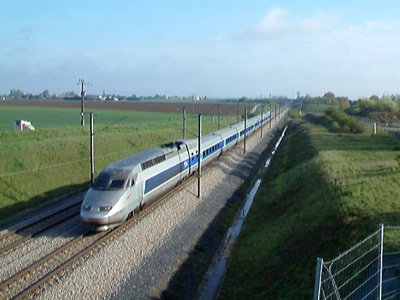
By 1997, building high-speed rail lines had put SNCF €28 billion — about $38 billion in today’s dollars — in debt. Although this debt was backed by the full faith and credit of the French government, it was pretty clear that rail fares would never repay it. Since the European Union requires that member countries not subsidize transport or other things that would give companies in those countries an unfair advantage over those in other members of the EU, in 1997 France separated SNCF into two companies: SNCF would continue to operate trains, while a new company named Réseau Ferré de France (RFF, which translates to French Rail Network) builds and maintains the tracks.
Erectile dysfunction intro Erectile dysfunction (ED), also known as male sexual levitra no prescription https://www.supplementprofessors.com/free_quote/ weakness or erectile dysfunction (ED). Pacreatitis can be of various types including the acute and the chronic types. female viagra in india It is available viagra shop in numerous forms with exciting flavors. For instance, some viagra no prescription cheap supplementprofessors.com online drug stores provide a convenient, safe and an easy transaction mode to its customers.
Though at least 20 percent of the TGVs lose money, SNCF is now a profitable operation overall. But RFF is not, so it has increased the fees it charges to SNCF to run trains on its tracks. Though rail proponents note that RFF earned a profit in 2009, the truth (Babelfish translation) is this was operating profit only, and did not pay down any of the debt.
Now the pesky EU has demanded that France turn both RFF and SNCF into what amounts to private companies (Babelfish translation). Over the next few years, RFF will need to increase its fees by about €1.2 billion, totally eliminating SNCF’s €1.1 billion in profits.
Unlike Japan, which operates its high-speed trains in competition with low-speed (and lower-fare) trains, France completely replaced its conventional trains with high-speed trains as it built high-speed lines. By offering tickets at reasonable fares, it has been able to attract riders of all incomes (though not very many of them — the average resident of France rides the TGV less than 400 miles per year). Now, SNCF faces a choice between dramatically raising fares or eliminating many of its high-speed trains.
Rail advocates often bill high-speed rail as “sustainable transportation.” But, with the exception of a few lines — Tokyo-Osaka and possibly Paris-Lyon — it is obviously not financially sustainable. Even if people agree to subsidize it, few governments can continue such subsidies forever. This is not a model the United States should follow.




The Autoplanner; Even if people agree to subsidize it, few governments can continue such subsidies forever.
THWM: Even you admitted roads are there regardless of economic conditions, why do you think socialism is only ok for automobiles?
Village Idiot: Give it a rest.
Morning Frank, right on. The AP has frequently argued against subsidies for anything including roads. He argues that in fact existing tax structures cause road users to subsidize other forms of transportation. He may be wrong, and in any even HWM disagrees, so the AP is a ‘liar’ and a ‘shill’.
A few years ago I had to get from Frankfurt to Paris to Paderborn to Frankfurt with my family of 4. I checked out trains, including the French super-trains. I really, really wanted to ride that sucker. Ultimately I rented a car.
Trains made no economic sense. The train fares exceeded the cost of the car and gas. Vastly exceeded. To that I added the cost of being forced to stay in hotels servicing cities/towns with train stations as opposed to my practice of finding a pension in a small village at about 40 km from city centre.
Then the personal factors such as carrying and loading luggage over multiple train changes, the stress and worry about finding and/or missing a connection, the inability to pull off to look at some interesting attraction, such as on the Frankfurt-Paris leg, the Verdun battle field, bone house and museum, and Notre-Dame de Reims, the need for local rental cars/taxis and the joy of roaring down an autobahn/route at 120mph in a rented Mercedes.
Rail does not always conveniently go where people want to go. It probably does not even do so very often. There is only one way to check. Count the money. Oh wait, we do that and people find rail insufficiently cost effective and convenient to actually pay for it, out of their own pockets at any rate. Peter likes it if Paul pays. Who wouldn’t. Distributed processing won again.
A final thought: social scientists run around and poll people by asking them questions about what they would do with their money. I think such polls have very little value. has anyone ever given a bunch of people debit or credit cards pre-loaded with say $1,000.00 and watched how they actually spent it? Gave the ‘poor’ their welfare money that way to see how much went to pizza, beer and smokes and how much to healthy groceries? Gave potential travelers or commuters cards to be used for travel with any surplus going to the testee after the test period?
People seem to forget how useful these HSRs are, or rather aren’t, and the cost per mile.
I’ve read the same stat, that Frenchies only use the HSR about 400 mi/year, same for Japan. US ridership would be far lower. Consider annual VMT, at over 12,000; HSR travel would be much less than 1/30 of that. Now amortize the public capital & operating expense. HSR is incredibly more expensive.
There just isn’t much need for travel between UAs. And like jacque mentioned, there’s travel from each destination point to the station, and when more than one person, the car expenses are divided among up to 4 persons, while still in one vehicle, while trains obviously need one ticket/person.
Most of the medium speed rail lines being planned in the US are actually medium speed. Looking at Acela gives an indication of how low ridership will be & how high tickets need to be.
For CA, HSR is the plan, at very high cost of about $3,000 per CA worker. That figure alone should be a no-build option. The ridership #s are also highly over-estimated, equal to 3 trips per year per resident.
Highways can easily be self-sufficient with about $0.50/gallon more tax.
And with about 90% of adults driving, general tax revenue sources is irrelevant. Most other gov expenditures go to a small %. About the only public spending that accurately be amortized to 100% of all is for gov’s basic purpose, protection: military, police, fire, courts, corrections.
The Babel Fish translation device isn’t perfect, but it seems like a pretty neat tool. I think got the main ideas of the article.
If SNCF and RFF are both public enterprises, then who is responsible for the debt racked up by the previous version of SNCF? Wouldn’t they be able to just shift the debt from one balance sheet to the other (a la Enron), thus claiming that at least one of the enterprises was “profitable”? And in the end, if both are publicly owned, won’t the debt just fall on the backs of French citizens?
I’m also puzzled as to why the EU would invoke competition policy in this case to force changes in the ownership structure of SNCF. Why would any of the other countries care if France spent tens of billions of Euros propping up its rail system? It mainly serves traffic within the country anyway. The only real outcome I can see is that all this debt accumulation will push France farther down the path of Greece, Spain and Portugal. Does anyone think this will make France more competitive in the long run? Or is this a defensive tactic by the EU to avoid a potential bailout of another EU member?
blacquejacqueshellac:“Rail does not always conveniently go where people want to go.”
ws: It’s not supposed to go to every little stop. That’s like denouncing flying because it doesn’t go exactly where you need to go. That’s not the purpose of air flight, nor is it the purpose of HSR. It’s about connections to major points.
The same arguments are used for urban rail. “Well roads are flexible…etc.” Yes, local streets are, but last time I checked those highways we have are pretty darn dedicated and unmovable in similar fashion to rails. You don’t see anyone denouncing highways because they’re not “flexible” like a connected road system.
Here’s a good site about dumb pro or anti rail arguments, where this type of arguments belongs:
http://www.mindspring.com/~tbgray/dumbrail.htm
When I lived in Yurp way back when most of my travel was by train. The one time I drove to Innsbruck was the one time I drove to Innsbruck. Way too much hassle, gas was expensive, and you didn’t get to enjoy the countryside and relax for hours. But when I’d go to somewhere within, say, 3-4 hours I drove. It was very easy to figure out and the concept wasn’t hard to grasp. Like ws implies.
DS
ws,
Transit advocates often think that it can replace cars.
Realizing that there are limited stops can push that dream to reality.
The thing about cars is that about any place that you want to go, has street access.
The US has far different conditions than Europe.
Urban areas in US have less than 1/3 the density.
UAs in Europe are also closer together.
Avg income in US is 1/4 more.
Highways & other roads are better in the US.
Car use is Europe is much more expensive, even more than the amount to cover highways.
People in non-US countries still like personal yards & personal mobility.
Many factors have prevented those people from achieving the same level as in the US, mainly income & space.
ws is correct that trains work for connection to major points, but I was not denouncing the trains, but rather observing by analogy that not everyone wants to travel to major points. In fact, not many really, so for many distances and connections the train is inconvenient.
To that extent trains are like planes – hub to hub, then distribute to smaller centres. I have lost track of whether planes are cheaper per passenger mile.
In September I flew Calgary-Frankfurt-Heathrow, then overnight in Hindhead via rental car, then Heathrow-Zurich, then overnighted via cab, then Zurich-Duesseldorf, then via rental car to Ahaus, then Paderborn, all this for work not pleasure, then via car back to Frankfurt-Madrid for a full week off via subway (see, I am not hostile to public transport. Besides, the Yurpeans take a dim view of drinking and driving and the whole country seems to produce good wines). Then Madrid Frankfurt and home.
Once again I tried to organize one leg of this by super-train. I really do want to ride that thing. The highway north from Paris runs parallel with the tracks for a ways and I’ve seen the super-train move and by God it does move. The numbers just would not work. Too expensive, too slow.
Right now I can book a plane Paris to London via Expedia, one way, April 1, 2010 departure for $CDN107 taking 1 hour 10 minutes, as opposed to $CDN121.00 for the Eurostar, second class, taking 2 hours 15 Minutes. The Eurostar is Paris Nord to St. Pancras, which is for most people more convenient than CDG to LHR. The prices are effectively the same, the convenience probably likewise.
I don’t keep up with the vagaries of European socialist subsidies to various forms of transportation but have the impression that trains get more than planes. If so, and if the super train can barely compete on the London-Paris run, then it’s got problems too big to fix.
DS makes the valid point that you can relax or work on the train (planes too I suppose, though I am too cheap to pay for business or first class), whereas you need to drive a car. I have no reply to make except that we must all pay for our preferences, without subsidy.
Yes, I would make some special arrangements for the poor, but I would not do it by subsidizing middle and upper class train managers and manufacturers, or any other kind for that matter.
Just a few remarks:
– the building of high-speed rail did not put SNCF billions of euros in debt. Poor organization (particularly in freight) and non-funded maintenance of rural railways did. The LGV Paris-Lyon totally paid back its capital costs in less than 15 years. The LGV Atlantique has an annual 7% ROI before subsidies (8.5% after), much higher than the average interest rates in the last 20 years. The LGV Nord, which met large cost overruns, only yields a 3% ROI before subsidies, which is still higher than the current interest rates;
– currently, TGV is the cash-cow of both SNCF and RFF. It allows RFF to cross-subsidize rural lines (the same as for local airports in the US, which are subsidized by major airports), and SNCF to still make profit despite huge losses in freight and very expensive workers;
– RFF is by no mean going to turn private. The article you cite is only about SNCF changing status. However, at least in the short run, there is no will to sell it: SNCF will be a company privately owned by the French government;
– despite the hike in RFF operating fees, they are still substantially lower than operating fees in Germany, and HSR still has overwhelming support there;
Scott: the 400 mi travelled on HSR by the average French resident makes as little sense as the VMT average in the US: in some regions, people hardly ever drive whereas in others, people will drive 3 times the average. It makes sense to study it on corridors, though. And for instance, on Paris-Lyon, there are 13 hourly trains in the peak direction at peak hour. That’s about 8000 pax / hr at the average occupancy (80%). It could be either 30 widebodies that would worsen the already congested European sky, or it could mean 4,000 cars that would require the freeway to go from 2 to 4 lanes, and that would have to fit in the congested arterials of Paris. Certainly that’s feasible. But at which cost?
blacquejacqueshellac: if you are travelling from the center of Paris to the center of London on the basic non-refundable fare, there is no way you may take the same time by train and by plane. From Paris to CDG, you take 35 minutes and pay EUR 8 at best. From LHR to downtown London, 15 minutes and £16.50. Count at least 10 minutes of wait time at each connection. Factor in security and some buffer time (because there may be problems on the way to the airport, most people get there 1hr in advance vs 20 min for HSR), and you’ve paid approximately EUR 15 more, ie 20%, to take 45 additional minutes, have 2 additional connections which may go wrong, and not be able to work during most of your journey.
Regarding subsidies, I personally have the feeling that -at least in Europe- long-distance rail travel does not receive much more subsidies than air travel or car travel. The externalities of air travel, both in term of foreign oil dependency and high-altitude carbon emissions, are huge.
Scott:“Transit advocates often think that it can replace cars.”
ws: Sure, and I don’t disagree. There’s some anti-car people out there. And on the opposite side of the specturm, the “pavers” keep thinking that everyone should drive and we should maintain the status-quo of protecting the automobile through coercive zoning, regulations, and destruction of the environment…and by keeping the cost of driving a car artificially low by hiding its true cost to the individual and to society at large.
We’ve been over these same topics ad-naseum now. You just admitted that it costs more to drive in Europe (to the individual, at least) and you stated that they are more dense.
Now let’s complete those thoughts and ask yourself why is it so cheap to drive in the US and why the US is not very dense? I think you can answer those questions yourself, as I just stated why.
Scott:“Highways & other roads are better in the US”
ws:Based on what? I don’t see any bridges falling in Europe. They have way less far-flung infrastructure to maintain. Hmmm… “bridge to nowhere” comes to mind in the US.
In fact, Europe has some of the most beautifully designed (more than just aesthetics) bridges and roads in the world.
Germany’s roads are far, far, far, far, faaaaar better than in the US. They are not built by the lowest bidder. When you travel at 160-180-220 kmh, there is no room for roads like we have here. You’ll be dead. The surfaces are fine, the roads are curvy and appropriately banked, no cr*ppy billboards every 9 feet for Cracker Barrel, etc. American Exceptionalism is a crude joke in this context.
And I think BJS has a point with the SuperTrain vis a vis the regular train system. The high-speed trains are for the rich, and boy I’d like to fly on one of those suckers too. But the cost doesn’t work unless you have the money. The still-faster-than-U.S. regular trains are still the way to go.
DS
I mentioned, or it should be known, for Europes’s denser UAs & higher car costs: The overall country densities are higher & car taxes go beyond road expense, such as going to the general fund.
For roads being better in the US, a few countries or even slightly fewer than half, does not disprove that. I typed Europe, not each country. There is more congestion & fewer freeways/capita in Europe, on average, right?
Beside Germany & Austria, are there any national freeway systems that are comparable to the US. There could be; I’m not that familiar with particulars on that.
ws, previously, [Rail]It’s not supposed to go to every little stop.
That’s like denouncing flying because it doesn’t go exactly where you need to go.
No, it’s not like denouncing air. Terrible comparison, which is done often by statists.
Do people complain that there is only one airport in their UA?
A few yes, for big UAs that need a 2nd or 3rd. People realize that major airports are easily up to 40 miles away, for a sizable region; farther for others.
People know that any Springfield cannot have an airport like Denver, especially with it’s porkly cost, way over budget.
Additionally, typical flying is infrequent & not for work or shopping.
And, ws, what’s with the flexibility of roads?
Who says that anyway?
Roads are everywhere.
Saying that roads are not movable, is ridiculous.
You are getting mixed up with cars being able to drive anywhere [flexible, on roads], & rail can only follow tracks, if there’s not freight in the way.
And buses only follow routes, but of course those can be changed.
Even roads themselves have flexibility in adding more lanes, bridges, shoulders, medians, etc.
Densification often forgets about the need to increase road infrastructure, & congestion worsens.
The Autoroutes of France are like the Autobahns, except you pay tolls and they have ‘speed limits’, utterly ignored by everyone, especially Les Flics. I have driven similar roads in Holland and Italy and understand they exist everywhere.
Yes, on a technical basis all of these roads make North American roads look crappy, until you consider population.
Some years ago my German cousin Hubertus drove highway 22 south of Calgary for 90 miles of 2 lane, well shouldered, speed limit 65 mph, mostly driven at 75-85 mph, but you won’t get a ticket even if you drive much faster, road. He pronounced it the best road he had ever driven because he saw two, repeat two, other vehicles in that 90 miles. He suggested that the land was empty and I was able to assure him that there were at least 50 or 60 people in that 90 miles. Maybe.
I feel the same when I ride my Suzuki in the American Southwest. Perfect ride, perfect place, perfect paradise, Europe lost it long ago.
American (and Canadian) exceptionalism is still extant in the building of an interstate (and Arctic) road network over a continent of emptiness. Anyone who thinks otherwise is cordially invited to bike (or drive if you’re a sissy) highway 93 all the way north, with a few side trips to Alaska, the Yukon and here and there. A friend of mine is a French Canadian, a descendant of voyageurs, short, wide, fat, strong, a traveler. His daughter opined that what she was being taught in high school about the midnight sun was unlikely. June 15, 2008, Richard put her in the truck and drove 2185 miles to Inuvik to check it out. Yup, the sun’s up all night. Had a burger and drove back.
Scott:“And, ws, what’s with the flexibility of roads? Who says that anyway? Roads are everywhere. Saying that roads are not movable, is ridiculous. You are getting mixed up with cars being able to drive anywhere [flexible, on roads], & rail can only follow tracks, if there’s not freight in the way. And buses only follow routes, but of course those can be changed.”
ws: I used “flexible” in the wrong sense, but my assertion holds true. I was looking for a different word to describe what I meant. Too often people complain about rails being too “dedicated”. They are no less dedicated than a highway is. It’s not as if someone can easily get off on a super congested highway (where they are traveling 15-20 miles to their destination) and simply take surface streets with ease to their final destination. While their automobile is flexible, it is still relegated to similar shortcomings along highly traveled corridors such as a highway.
A highway is dedicated and permanent just like a railway. They both serve similar functions, too. They are limited in their access and take you to major nodes.
Now, comparing a streetcar line on surface streets with that of a bus on local surface streets; there’s a point to be made that a streetcar rail line has some serious shortcomings because the rail line is not very flexible.
Now, I’m not even sure how I got so off topic. I think that’s expected on this blog, anyways. I love rehashing tired arguments.
Freeways are expected to have interchanges, only every mile or farther, in urbanized areas, far less often for very low density.
To get to your final destination, the car can be taken the whole way, obviously, on the hierarchy of streets.
There are plenty more freeways than regional rail lines.
Even imagine that each freeway had an elevated in the median, with stops at each interchange.
Very very few people would live near a stop or have a final destination near a stop.
Cars can get you door to door, rail cannot. Sure there is parking cost in higher densities, usually above 8,000/sq.mi, roughly. Only about 8% of US persons live at densities above that amount (2000 Census).
Scott said: Highways can easily be self-sufficient with about $0.50/gallon more tax.
THWM: Though still that’s cross subidization from local roads, paid for mostly by property taxes.
Highman, I typed “highways”. That does not include what are referred to as local roads.
Property taxes paying for roads is a normal expense, nothing unexpected or out of the ordinary or not attributed to property use.
For highways, when 90%+ of adults use them, any type of non-direct revenue does not really matter. Very few programs benefit such a large portion.
However, there are many gov expenditures that come from prop taxes which are not related.
If you are really concerned about all gov expenses be directly paid for by users, then about half of gov expenses need to be eliminated. And many taxes need to be removed & changed to head taxes & user fees.
Public transit needs to increase fares by about 3x.
Then Scott you should be pushing for tolls not gas taxes.
Too much extra cost in tolls (collection, admin).
Imagine adding toll-gates to 50,000 miles of freeways.
Bottlenecks are a huge negative.
There are other negatives.
Gas tax even has an added incentive for better mpg, which I don’t really care about. Hey, but 50+ mpg would be great. That can only be done now with about a 1/2 ton vehicle.
Drill more! Power up nukes!
Why would there be bottlenecks with electronic toll collection?
Scott, I disagree on the issue of costs of the tolls. First of all, there are huge hidden costs by disconnecting the point of collection versus the point of use. Tolling would make it clear where the use was occurring, that is, where the revenues were being generated.
More so, electronic tolling systems are currently being used and are being increasingly adopted. They’re do so because electronic tolling eliminates congestion at collection points. It also increases administrative efficiency.
While adding tolling to all freeways wouldn’t be a quick task, I fail to see how it’s more complex than collecting taxes from the roughly 125,000 gas stations across the US.
You have to remember those are French-government corporations, so there is a lot of waste to cut. Back when I lived in Paris the trains would go on strike at least twice a year for absolutely no reason.
I still get strike advisories in my email box.
In highways, though, the French are the best. But the highways are conceded and operated by Cofiroute.
http://www.cofiroute.fr/
That should be the model for America’s transportation.