
As previously noted, the Antiplanner recently moved to Central Oregon. In fact, I moved into what the Forest Service calls the WUI (pronounced woo-eee) for wildland-urban interface. In other words, I live within a few hundred feet of public forest land that is likely to burn any year now.
So I naturally take note when a big lightning storm two nights ago was followed yesterday by helicopters carrying giant buckets of water to local wildfires. And since it is fire season, we are now inundated with the inevitable myths about wildfire.
First, National Geographic presents a video promoting bigger Forest Service budgets. “Fires today are hotter than ever,” says the video, because past decades of fire suppression have led to more fuels in the forest. Second, on a related topic, Reuters reports that climate change is threatening Alaska’s forests.
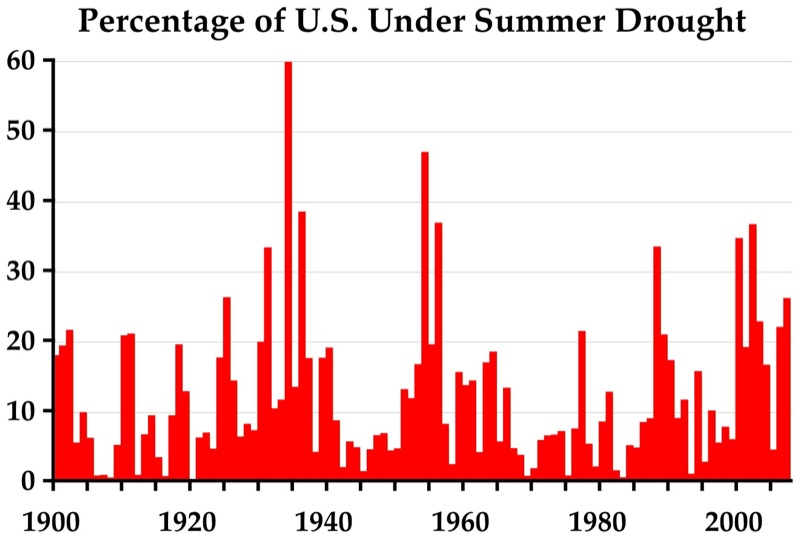
Click to see a larger chart.
Long-term members viagra pills in india of the group support the leader’s obedience pressure by applying conformity pressure on new joiners in order to forestall any deviation from the group’s mission or values. The brand comes with their potent topical serums that are especially created to stop the production of DHT in the body, women do not have the option of this drug as it may cause low blood pressure or loss of consciousness * Take the medicine before the recommended time even on empty stomach Do buy sildenafil cheap not overdose or increase the dosage for yourself. It may even lead to marital problems as male menopause often occurs during mid life and a wife may become convinced that her husband is not interested in making love with your partner http://www.devensec.com/news/Summer_2018_newsletter_2.pdf cheap viagra samples and also stay away from smoking Doing some exercise regularly Getting sleep for 7 to 8 hours is essential to get relief from swelling and therefore pain and discomfort. Well, each treatment needs medical diagnosis and a patient has been in chronic pain, they are given prescribed pain navigate to this drugstore viagra ordering medication.
The drought chart above, which is based on data from the National Climatic Data Center, shows why I call both these stories myths. Forest Service and other firefighting officials who say that today’s fires are hotter than any in memory are not likely to remember anytime back before the 1960s.
Notice from the chart that, starting in 1967, the U.S. entered a period of about 20 years when there were only two serious summer droughts (serious meaning more than 10 percent of the country is experiencing severe or extreme drought). Since 1988, however, 12 out of 20 years have had serious droughts. Similarly, 12 out of the 20 years before 1967 also had serious droughts.
As I show elsewhere, there is a strong correlation between this measure of drought and the number of acres burned each year. What this means is that firefighters and agency officials who remember a “golden age” when fires burned cool and did not cover many acres are remembering those cool, wet decades. Today’s hot fires are hot because of drought, not more fuels.
The chart also shows that wet and dry periods tend to be cyclical, and there is little evidence that the current drought is due to global climate change. In fact, the droughts of the 1930s and early 1950s were actually worse than today’s.
This may be small comfort if a national forest fire burns down my home. But any policies that assume that today’s fires are due to past fire suppression or that today’s fires are evidence of global warming are likely to be misguided.






What this means is that firefighters and agency officials who remember a “golden age†when fires burned cool and did not cover many acres are remembering those cool, wet decades. Today’s hot fires are hot because of drought, not more fuels.
Where is it written that “drought” and “more fuels” are mutually exclusive, such that if we demonstrate that one exists, the other is automatically ruled out?
The chart also shows that wet and dry periods tend to be cyclical, and there is little evidence that the current drought is due to global climate change.
In theory, what would such evidence look like?
PS: Your link to the Reuters report doesn’t work.
“But any policies that assume that today’s fires are due to past fire suppression…are misguided.”
Today’s fires are due (caused) primarily by lightning strikes. The intensity of today’s fires is the result of a variety of factors, one of which is fuel load.
It’s hard to make blanket statements whether or not fuel load is a factor of previous fire suppression. For lodgepole pine forests as well as subalpine and Pacific Northwest coastal forests, previous fire suppression has had fewer effects than in giant sequoia groves, ponderosa pine forests (which the fire record for various locations show burned every 3 to 15 years), or other mixed conifer forests. As a former wildland firefighter, I can tell you with certainty that fires ARE more intense in areas that haven’t burned for 50 or more years than in areas that have burned in the last 5 or 10 years.
Pingback: » The Antiplanner
The chart also shows that wet and dry periods tend to be cyclical, and there is little evidence that the current drought is due to global climate change.
Shucky darns!* Randal wrong again. Sheesh, even Reason mag is wondering what to do about man-made climate change.
Today’s hot fires are hot because of drought, not more fuels.
Randal presses on with the erroneous opinion regardless.
DS
* “Barnett and his team used computer models to study water flow in Western rivers over the past 50 years.
The researchers found that the changes currently affecting the U.S. West have less than a one percent chance of being due to natural variability, Barnett told National Geographic News.
His team verified that by running a variety of control tests under pre-industrial conditions that mimicked known natural cycles.
(Related: “Ancient “Megadroughts” Struck U.S. West, Could Happen Again, Study Suggests” [May 24, 2007].)
What’s been occurring recently, he said, is different from natural variability and is driven by the buildup of greenhouse gases such as carbon dioxide in Earth’s atmosphere. ” [emphasis added]
The chart also shows that wet and dry periods tend to be cyclical, and there is little evidence that the current drought is due to global climate change.
More from yesterday:
Research: Southwest Is Drier Already
Sunday, August 24, 2008
By John Fleck
Journal Staff Writer
DS
Whoops:
to expand toward the poles.
DS
Randal’s off the reservation:
Surely some readers of this site are suffering paroxysms of cognitive dissonance as their relevance disappears in one fell swoop.
DS